
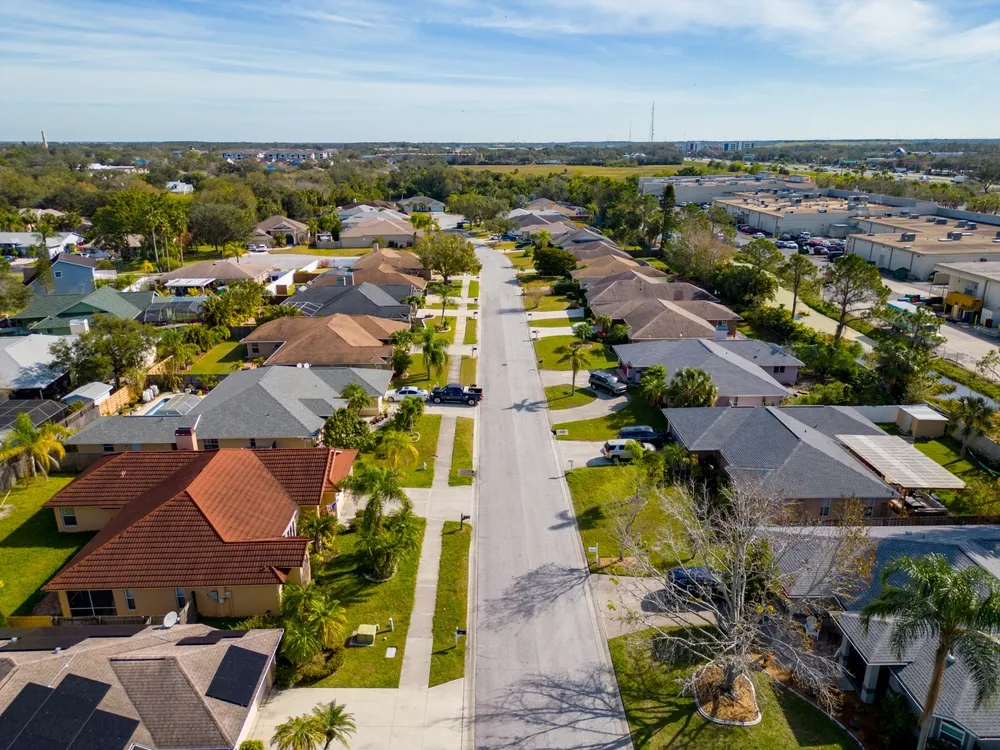


Florida’s coastal housing markets have tightened considerably over the past decade, as population growth outpaces the limited supply of buildable land along the Gulf Coast. Sarasota, Florida, sits squarely in this pressure point: a small, largely built-out peninsula facing sustained demand from buyers relocating from across the country. That imbalance between fixed land and rising demand is reshaping how buyers approach the market. It’s also shaping what they’re willing to do with a property once they own it.
Across Sarasota’s residential corridors, a growing number of high-net-worth buyers are acquiring properties with the explicit intention of demolishing them. According to Tom Cail, co-founder of Cail Grande Group at RE/MAX Alliance Group, the pattern reflects a simple belief about coastal real estate. Lasting value comes from the land, not the structure built on it.
The Dirt Thesis
Cail has watched Sarasota’s real estate market since 1992. The trend he finds most telling right now is the logic behind who is buying what, and why.
“At the end of the day, the value of real estate is always the dirt,” Cail says. “The structure itself, unless it’s some famous architect or something along those lines, is a depreciating asset from the time it’s completed.”
That framing explains why buyers are willing to spend seven figures on homes they have no intention of keeping. In some Sarasota neighborhoods, Cail says, buyers are paying $1 million or more for non-waterfront properties and immediately demolishing them to build new construction. The structure is irrelevant to the transaction. Only the parcel matters.
Cail himself lives in a 70-plus-year-old home in a neighborhood where buyers are now spending $900,000 on comparable properties and tearing them down to build new. “As that happens, it attracts more people like that, and the next thing you know, the whole neighborhood’s redeveloped,” he says. In his view, the redevelopment wave is a rational response to a simple fact: no new coastal land is being created, and well-located parcels are scarce.
Limited Land Supply
According to Cail, two forces are driving the teardown trend: aging housing stock and a limited supply of desirable land in a built-out coastal market.
Much of Sarasota’s barrier island and near-coastal housing was constructed 40 to 50 years ago, often below current base flood elevation standards. These homes carry meaningful liabilities: higher insurance costs, flood risk exposure, and a ceiling on what buyers will pay for them. Cail says the same home, rebuilt to current flood elevation, probably commands roughly $1 million more.
“You can’t have too much money into the dirt because the value is the dirt, not the structure,” he says.
At the same time, the supply of well-located land is effectively fixed. “There’s nothing left to develop, there’s no more vacant land, and people are still coming here,” Cail says. “If people are coming and there’s a limited supply, that’s kind of the law of economics.” Acquiring an older home on a desirable parcel and demolishing it has become an increasingly common path to securing a premium location.
When Teardowns Fail
Cail distinguishes between teardowns that make financial sense and those that don’t. The critical variable is the ratio of structure to land value. Buyers who over-build relative to lot size often run into problems. This happens when a home’s construction cost exceeds what the land can support in resale value.
“We see some cases of people over-building for a lot,” he says. “Those are the ones we tend to see have a problem down the road.”
The teardown strategy works when the land itself is genuinely scarce and desirable: waterfront, near-waterfront, or in a neighborhood undergoing broad redevelopment. It becomes risky when buyers build at a scale that the local market cannot absorb.
Cail also acknowledges a social dimension to the trend. “It does change the character of the island,” he says of barrier island redevelopment. “It makes it less affordable for people to live out there. I get that. But it’s going to happen. It’s inevitable.”
Market Outlook Ahead
Cail and his partner, Jason Grande, have spent about 18 years focused on Siesta Key and Sarasota’s west-of-Trail neighborhoods, where the teardown dynamic is most visible. They believe the redevelopment wave is not temporary.
“The biggest thing we’re going to see here is more and more new homes being built, older homes being taken down and new homes being built,” Cail says. “A lot of it’s functional obsolescence. A lot of it is purely the amount of money coming into town.”
He points to active development along Big Pass on the Gulf of Mexico, where 15,000-square-foot homes are under construction with anticipated sale prices above $25 million. Cail sees these projects as leading indicators of where neighborhood values are heading, as high-net-worth buyers increasingly view Sarasota as a long-term destination.
Two market conditions reinforce the trend’s durability. Nearly 50% of all Sarasota transactions are cash, according to Cail, which means fewer owners face mortgage pressure that might force discounted sales. And many homeowners who do carry mortgages refinanced when rates were near 3%, reducing the incentive to sell. The combination keeps inventory constrained. Cail says the market currently sits at four months of supply, while demand from out-of-state buyers continues. That demand comes primarily from the Midwest, and increasingly from the Northeast and California.
For buyers considering the Sarasota market, the teardown premium carries a specific implication: the price of a property in a redeveloping neighborhood increasingly reflects the land’s future use, not the current structure’s condition or livability. Buyers waiting for a price correction driven by distressed sellers may be waiting a long time. The market’s cash-heavy ownership base makes a large-scale correction unlikely.
About the Expert: Tom Cail is co-founder of the Cail Grande Group at RE/MAX Alliance Group in Sarasota, with over three decades of experience in the Sarasota County market dating back to 1992.
This article is intended for informational purposes only and does not constitute legal, financial, or investment advice. The views and opinions expressed herein reflect those of the individuals quoted and do not represent an endorsement of any company, product, or service mentioned. Readers should conduct their own due diligence and consult qualified professionals before making any investment decisions.