
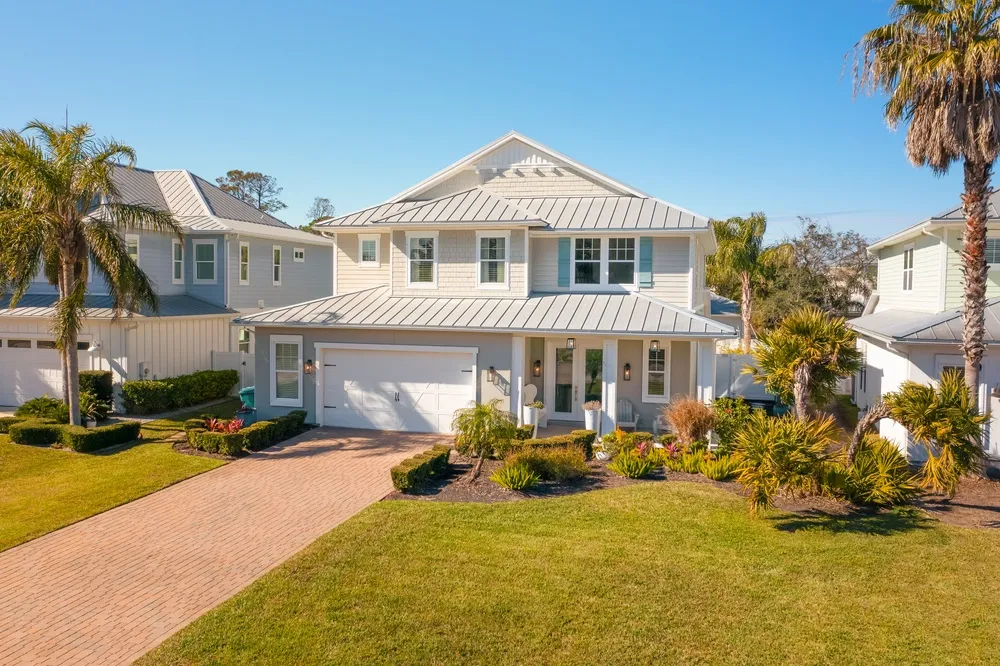


Two Northeast Florida markets, a short drive apart, Ponte Vedra Beach and Nocatee, are producing sharply different outcomes for sellers. The divergence comes down to one factor: how much new construction inventory is competing with existing homes.
In Ponte Vedra Beach, where land available for new construction is nearly exhausted, prices rose 13.6% year over year in the second quarter, according to Gwinn Volen, Owner, CEO & Realtor at The Volen Group, Keller Williams Luxury International. Nocatee is a large community built in phases by a single developer, and it’s still selling through its supply of new homes. In some neighborhoods there, resellers are selling at losses of roughly 15%.
The differences between these two markets show that regional proximity doesn’t guarantee similar performance.
Scarcity vs. Surplus
Ponte Vedra Beach is close to being fully built out, according to Volen. This limited land constrains new supply, supports pricing, and keeps the supply of homes for sale low, at roughly three and a half months’ worth at the current sales pace. “You have so much new build inventory or almost new build inventory, whereas you have limited land in Ponte Vedra Beach,” Volen says.
Nocatee, by contrast, has seen sustained new construction. When builders finish a phase and move on, the homeowners left behind eventually have to sell into a market still stocked with fresh builder inventory. That creates an ongoing disadvantage for resellers that doesn’t exist in Ponte Vedra Beach.
Volen notes that Nocatee has had a tougher couple of years, though the most recent quarter showed improvement, with homes going under contract more quickly. Still, Volen characterizes the market as “a little flat” and points to inventory carryover as the primary reason.
55-Plus Resale Struggles
The most acute version of this dynamic is playing out in age-restricted communities like Del Webb Nocatee. When a builder sells the last home in a 55-plus development and exits, the original buyers eventually go to sell and face compounding challenges. They often paid elevated prices during the builder phase, including extra closing costs. They now compete against other resellers in the same community, many in similar situations. And the demographic itself introduces additional supply pressure: residents may need to relocate closer to family or transition to assisted living, creating selling activity that is not driven by market timing.
“The builders close out, and those owners had extra closing costs because they were buying from the builder, and then they go to sell, and they might be down 15%,” Volen says. She attributes this to both the pricing dynamics of the original purchase and the demographic pressures that accelerate resale activity.
This pattern is especially visible in Nocatee because the community is new and the builder’s exit is recent, Volen argues. The concentration of similar homes, similar purchase timelines, and similar seller motivations creates a market within a market: one that behaves differently from the broader Nocatee inventory.
Local Data Matters
Investors and buyers who rely on regional or national data get an incomplete picture, Volen says. “It all depends on the product, the house and where it is,” she says. “There are certain locations that are always going to move; they’re always going to sell.”
At the opposite end from Del Webb Nocatee, Volen points to Old Ponte Vedra Beach, a tract of land behind the Ponte Vedra Inn and Club, where Ponte Vedra Boulevard abuts the ocean. Land alone commands over $3 million there, and demand remains consistently strong. The contrast with a 55-plus resale community a few miles away illustrates how dramatically outcomes can diverge within a single metro area.
For investors, Volen suggests sorting listings by days on market rather than price to identify opportunity. Long-tenured listings may signal motivated sellers or mispriced assets. But the same data point can also reflect a stubborn seller who has not adjusted expectations. Separately, Volen says homes at the beach that need renovation represent consistent upside; buyers will pay more for stylistically updated homes because they do not want to do the work themselves.
Assessing Market Risk
The lesson extends beyond Ponte Vedra Beach and Nocatee to any market where new construction and resale inventory sit close together. Buyers and investors should evaluate the supply pipeline directly: how much land remains available for new construction, whether a builder is still active nearby, and how concentrated the resale pool is by purchase timing.
That evaluation also has a time dimension. Builder-driven surplus tends to ease once a community sells out and new supply stops arriving. Demographic-driven resale pressure, like the kind Volen describes in 55-plus communities, tends to persist longer, since it isn’t tied to market timing. Telling the two apart is what determines whether current pricing reflects a buying opportunity or a longer-term risk.
For buyers considering Northeast Florida, the right decision depends heavily on which local market they enter. A scarcity-constrained area like Ponte Vedra Beach behaves differently from a surplus-driven community like Nocatee. Within Nocatee, a 55-plus resale neighborhood behaves differently still. The relevant comparison isn’t the regional median, but the specific supply conditions of the street and community where a buyer is looking.
About the Expert: Gwinn Volen is Owner, CEO, and Realtor at The Volen Group, Keller Williams Luxury International, serving the Ponte Vedra Beach and Northeast Florida market.
This article is intended for informational purposes only and does not constitute legal, financial, or investment advice. The views and opinions expressed herein reflect those of the individuals quoted and do not represent an endorsement of any company, product, or service mentioned. Readers should conduct their own due diligence and consult qualified professionals before making any investment decisions.