
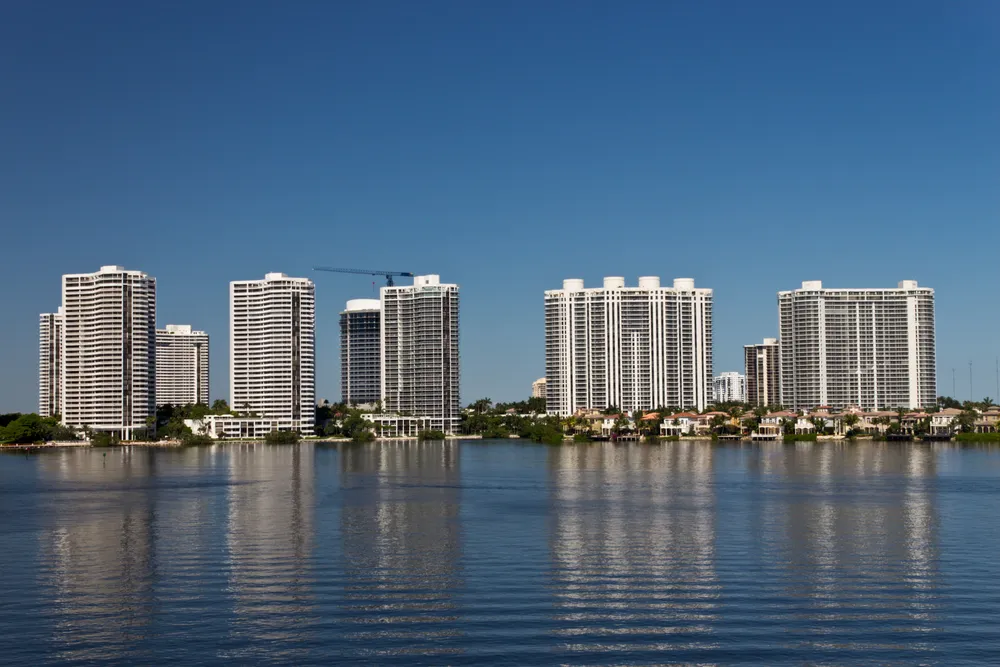


South Florida’s rental market is going through a structural reset. For years, condo owners in the region could count on renters as a reliable source of income, even as maintenance fees and taxes climbed. That assumption is now being tested. A historic wave of new apartment construction is giving tenants more leverage than they’ve had in years, and older condo owners are the ones absorbing the difference.
A wave of new apartment construction in South Florida is compressing rental rates for existing condominium owners. Stuart Berger, Team Co-Lead at the Stu Berger and Ana Aizenstat Team at Coldwell Banker Realty, says new buildings offering two months of free rent and modern amenities are drawing tenants away from older condos, forcing landlords to accept rents meaningfully below what they were collecting recently.
Why New Buildings Win
According to Berger, roughly 10,000 new residential units have come online within a 10-mile radius of his primary service area. That supply surge is now directly competing with the older condominium stock that individual investors have been renting out.
The competitive advantage of new buildings is not simply lower rent. It is the combination of concessions and quality. “The buildings are brand new, they got good amenities,” Berger says. “So people are going there instead of renting an old condo.”
The financial impact on existing condo owners is concrete. Berger says units that were renting for $4,000 to $4,200 per month are now clearing at closer to $3,500 per month, a reduction of $500 to $700 monthly, or roughly $6,000 to $8,400 annually. For owners already carrying high maintenance fees and property taxes, that compression can turn a break-even investment into a sustained monthly loss.
Wider Market Impact
The rental rate compression Berger describes extends beyond the individual condo investor. For owners who purchased during the 2020 to 2022 appreciation cycle at elevated prices, the combination of higher carrying costs and lower achievable rents is likely to accelerate decisions to sell. That would add further inventory to a lower-end condo market that Berger says already has one to two years of supply in some buildings.
The dynamic also affects how buyers should evaluate rental income assumptions on existing condo purchases. If new construction is structurally pulling tenants toward newer buildings at discounted effective rents, the rental income projections that justified purchases two or three years ago may no longer be achievable.
Berger connects this to his view of South Florida’s recent appreciation cycle. “We’ve never had a lot of appreciation here,” he says. “The appreciation we had was because of COVID and the South Americans and it boomed and now that’s over.” In Berger’s assessment, the market is reverting toward its historical baseline, in which rental yields on condominiums were never particularly strong.
The Concession Dynamic
The two-months-free-rent concessions Berger describes signal where new construction developers believe the market is clearing. Offering two months free on a 12-month lease at $3,500 per month reduces the effective monthly rent to approximately $2,917, a figure that makes it difficult for an older condo owner charging $3,500 in face rent to compete on value.
Berger says older condo owners who are renting their units are not necessarily losing tenants immediately, but they are losing pricing power. The market has shifted from one in which landlords could hold firm on asking rents to one in which tenants have credible alternatives and are using them as leverage.
Deciding Whether to Sell
As pricing power shifts toward tenants, more condo owners are facing the same decision: keep renting at a loss, or sell into a market that already has a growing supply of similar units. That decision hinges on an honest comparison between what a unit can actually rent for today and what it costs to hold, not the income assumptions that made sense two or three years ago.
“If you get an agent who’s not honest with you and says, oh, you’re going to make money here, you don’t realize for two, three, four years that you’re losing money,” Berger says.
The math itself is simple: compare current achievable rent against monthly maintenance, taxes, and financing costs. What’s changed is the outcome of that math. For owners in the sub-$800,000 segment, particularly in older buildings now competing against new construction offering move-in concessions, the gap between rent and carrying costs is widening. For a growing number of them, the numbers no longer work.
About the Expert: Stuart Berger is Team Co-Lead of the Stu Berger and Ana Aizenstat Team at Coldwell Banker Realty, serving the South Florida coastal corridor from Hallandale Beach through Hollywood, Aventura, and Sunny Isles.
This article is intended for informational purposes only and does not constitute legal, financial, or investment advice. The views and opinions expressed herein reflect those of the individuals quoted and do not represent an endorsement of any company, product, or service mentioned. Readers should conduct their own due diligence and consult qualified professionals before making any investment decisions.