
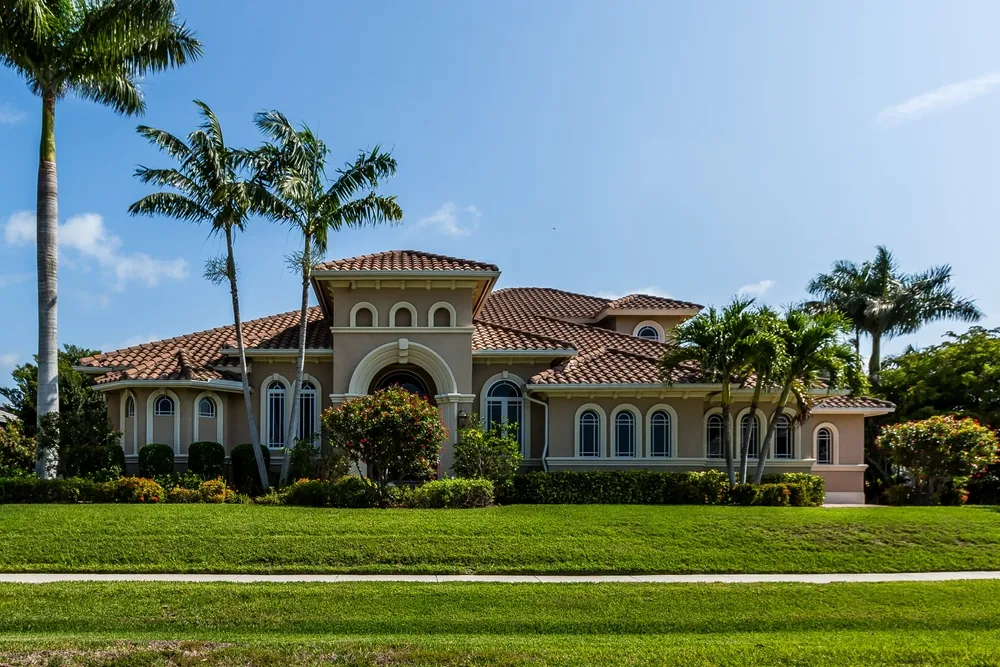


Most Florida markets can add supply when demand rises; Naples cannot. The Everglades block development to the south. The Gulf of Mexico blocks it to the west. Established communities limit growth to the north, and significant distance separates Naples from Miami to the east.
These natural boundaries have kept Naples property values stable through multiple market cycles, according to Michael Downer, founder at Quintessential Naples Team, at Downing-Frye Realty, and a broker associate with two decades in real estate.
But in 2026, prices are declining at roughly half a percent per month even though those boundaries remain in place. That signals limited land alone no longer guarantees a sale. Buyers are now also weighing a home’s condition, its risks, and its true costs.
Why Supply Can’t Expand
Downer traces the scarcity argument back to advice his family received when they relocated to Naples roughly 30 years ago. “Naples is pretty much recession proof,” he says, echoing what he was told at the time. “If you go south of here, you have the Everglades that you can’t build there. If you go west, you’ve got the Gulf, which means you can’t build there.”
The areas to the north, including Estero and Fort Myers, are already developed. Eastward expansion runs into terrain that limits desirability. Unlike markets where local zoning rules or political decisions limit supply, Naples faces physical boundaries that no law or vote can change.
Florida also has no state income tax, and Naples offers a concentration of lifestyle amenities, including beaches, golf, and restaurants. Together, these factors mean people are choosing to live in Naples, not simply settling there because they can’t afford somewhere else.
How Prices Are Correcting
The geographic constraints protect the overall market, but they don’t shield individual properties from price adjustments. Downer says buyers are now scrutinizing ownership costs, such as insurance, condo fees, and special assessments. They’re also paying closer attention to documented improvements and maintenance history.
“Buyers are paying more attention to well-maintained properties with documented improvements,” Downer says. “They’re being a little more selective as far as properties that are outside of flood zones in some cases.”
That flood zone selectivity marks a meaningful change. In a market where waterfront and near-water properties command significant premiums, buyer focus on flood zone ratings introduces a new factor into pricing. Properties once valued mainly for their proximity to water are now evaluated based on their actual risks and costs, including insurance and flood exposure.
For sellers, this means a well-maintained home in a favorable flood zone sells quickly, often at or above asking price. Older properties with deferred maintenance or higher risk sit longer and sell for less.
Downer frames the broader pricing dynamic simply: “Houses that are priced right are selling very quickly because buyers will pay for quality, but they expect the price to reflect the risk.”
Cash Market Feels Rates
One counterintuitive aspect of Naples, according to Downer, is that even a market dominated by cash buyers responds to interest rate shifts. He estimates that 70 to 75 percent of transactions are cash purchases. That figure might suggest the market is indifferent to Federal Reserve policy, but it isn’t.
But many Naples buyers are investing money rather than purchasing a primary residence, and they compare real estate to other places they could put their money. “Interest rates do have an effect on the market in that people have other choices in terms of investment and they can go into stocks or bonds or property,” Downer says.
When returns on bonds and similar investments rise, real estate becomes less attractive, even to buyers who would never take out a mortgage. In today’s high-interest-rate environment, some money that might otherwise go into Naples real estate is going into other investments instead.
Where Investors Are Looking
For investors who want to buy into Naples’s land scarcity before prices catch up, Downer points to North and Northeast Naples. These areas still carry a Naples address and remain close to beaches, but pricing hasn’t caught up to more established neighborhoods. Road extensions, including a recently completed Vanderbilt Beach Road extension, are improving access, and new community development is underway.
“If you’re an investor looking for new property or new construction, that’s where I’d go,” he says. For buyers looking at existing properties to renovate, Downer says opportunities are appearing across the broader market as older homes come to market at prices that reflect their condition.
Not One Single Market
The most common misconception Downer encounters is that Naples is a single market of wealthy cash buyers pursuing beachfront homes. In practice, it contains several distinct markets, including beachfront condominiums, golf communities, new construction, and non-gated homes east of I-75. Each has different pricing patterns, buyer profiles, and costs of ownership.
“We work with a lot of full-time, first-time buyers. We work with a lot of families,” Downer says. Some buyers prioritize boat access or golf memberships. Others want acreage and distance from neighbors.
The firm coordinates with financial planners and CPAs to run the numbers, comparing what a buyer gains from Naples’s limited land against ownership costs, flood risk, and what else they could earn by investing elsewhere.
“My job is to help people separate the important facts from the noise and make a decision they’ll still feel good about five or ten years from now,” Downer says. In a market where online research and algorithms can give buyers data but not local context, that translation matters.
Turning the big-picture argument about Naples’s limited land into a smart decision on one specific property determines whether a buyer captures the benefit of that scarcity or overpays for a property that carries more risk than its address suggests.
About the Expert: Michael Downer is the founder of the Quintessential Naples Team at Downing-Frye Realty and a broker associate with two decades of experience in the Naples, Florida market.