
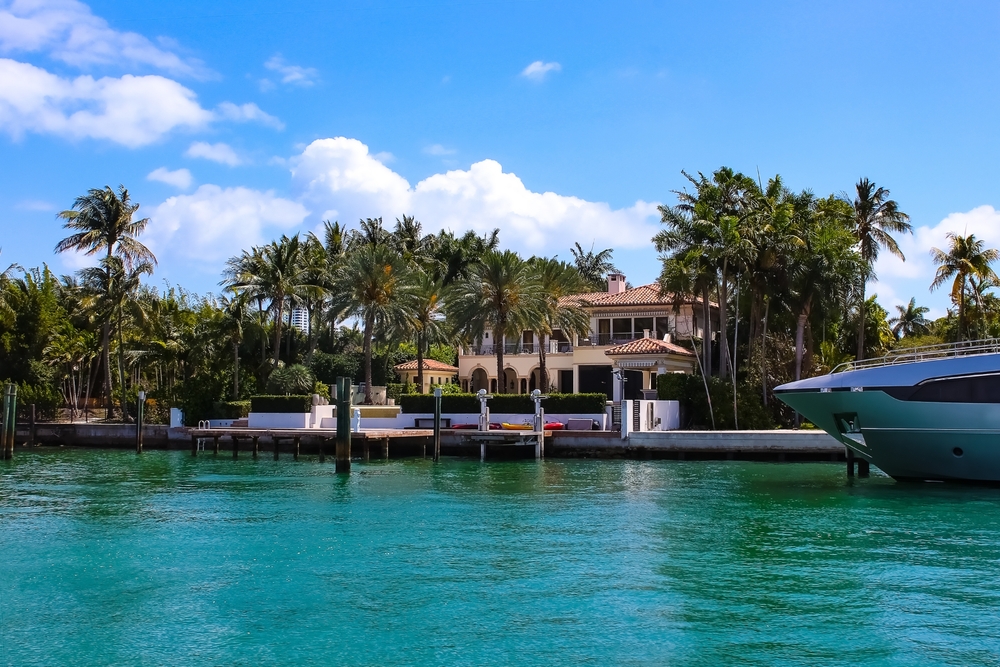


For decades, buying luxury real estate in Miami meant one of two things: a vacation home or a speculative bet. That calculus has changed. A convergence of corporate relocations, tax policy, and cross-border capital is quietly reshaping who is buying in South Florida — and why. Humberto Ramirez, CEO of Humberto Ramirez Developers LLC, has spent 15 years building custom waterfront homes in Miami, and what he’s observing on the ground isn’t a market cycle. It’s a structural shift in where American and international wealth is choosing to put down permanent roots — and what those buyers expect when they arrive.
Corporate Migration Effect
When major corporations began formalizing their Florida presence — Citadel, Amazon, and Apple among them — the headlines focused on the companies themselves. The more consequential story was the one that followed quietly behind: the senior executives, financial officers, and high-net-worth professionals who relocated with them.
These aren’t buyers acquiring a second home or parking capital in a trophy asset. They are relocating permanently, bringing the income, expectations, and lifestyle standards of New York and California with them — and leaving behind the tax structures of both. Florida’s absence of a state income tax has long been a draw, but what’s different now is scale and permanence. When a company builds a headquarters, it doesn’t reverse that decision in a single quarter. The executives who follow are making equally long-term commitments.
The result is a demand base in the $10 million to $50 million range that is growing not by chance, but by corporate design.
Beyond the Headline Purchase
The luxury market story that makes news is usually the outlier — the $150 million compound in Indian Creek, the record-breaking waterfront sale. But the more durable demand in South Florida is happening one tier down, among buyers whose names don’t make headlines but whose purchasing decisions are reshaping the market.
These are people who left high-tax states with high incomes and high standards. They are financially sophisticated, motivated by the same tax and lifestyle considerations that drove their employers south, and largely uninterested in compromise when it comes to where they live. Recent buyers in this segment include a former CEO of Royal Canadian and a former financial officer at one of the world’s largest technology companies — people relocating permanently, not purchasing a second home.
For this buyer, a luxury home isn’t a status purchase. It’s a practical decision — the same kind of rational calculus that led their company to relocate in the first place. Buyers in this segment are spreading across Miami, Miami Beach, West Palm Beach, and waterfront enclaves like Gables Estates, drawn by a combination of open space, warm weather, and the growing presence of peers and colleagues who have made the same move.
Capital in a Hard Currency
Running parallel to the domestic executive migration is a second, largely independent stream of demand: Latin American buyers for whom Miami real estate serves an entirely different purpose.
For buyers from Mexico, Venezuela, Colombia, and Argentina, the appeal of South Florida isn’t lifestyle or tax policy — it’s currency stability. In markets where local currency depreciation is a persistent risk, dollar-denominated real estate functions as a store of value in a way that savings instruments simply cannot. These buyers are not primarily chasing rental yield or price appreciation. They are preserving capital in a hard currency, in a market they trust.
What makes this significant for the broader market is its independence from U.S. economic conditions. Domestic interest rate movements, inflation data, and economic uncertainty that might give a domestic buyer pause have little bearing on a buyer whose primary concern is protecting wealth from devaluation at home. The result is a luxury market supported by two demand streams that are largely uncorrelated — which is precisely what makes the current moment different from prior cycles.
Quality Is the Filter
An executive relocating from San Francisco or Manhattan arrives in Miami with a reference point. They know what a well-built home looks and feels like, and they are not looking to manage a construction process to get there. They want a finished product that meets the standard they are accustomed to — on day one.
This is the expectation that is reshaping what developers build and how they compete. For this buyer pool, finish quality, interior design, and material selection are not secondary considerations to be negotiated down. They are the primary filter. A home that doesn’t meet that standard simply doesn’t make the shortlist, regardless of location or price.
For buyers in this segment, the standard is already set — by the cities they came from and the homes they left behind. Developers who can meet that standard consistently, delivering a finished product that reflects the quality of a true custom build, are the ones capturing this demand. As Ramirez puts it, the goal is simple: when someone walks into one of his homes, it should look exactly like the home they would have built for themselves.