
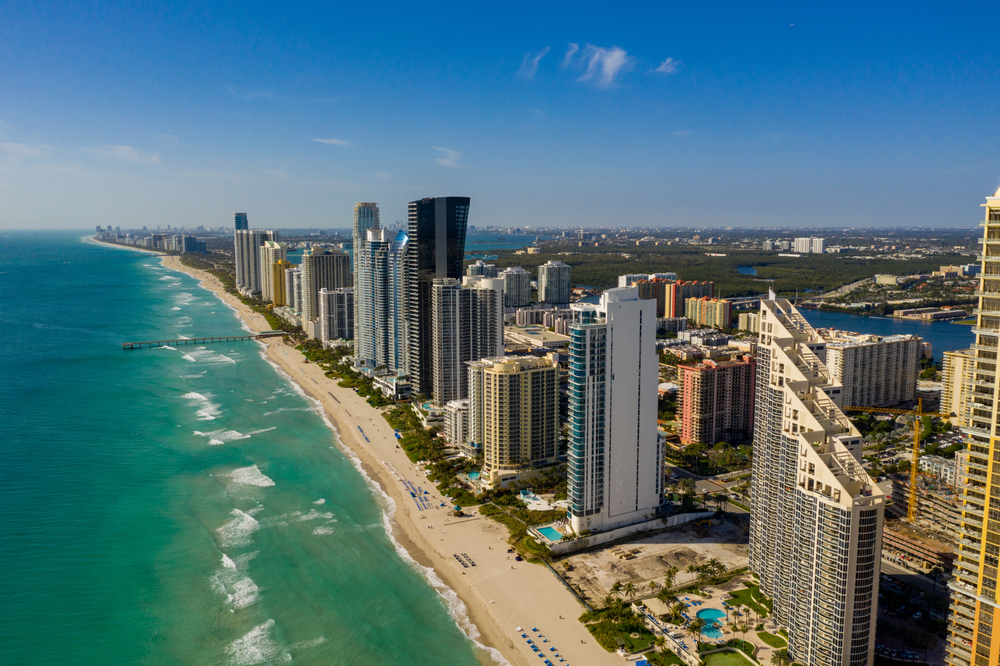


After years of relaxed lending standards and deferred maintenance, a growing number of Florida beachfront condo communities are rewriting their financing rules – not to screen buyers on creditworthiness, but to ensure every owner has enough equity at stake to stay.
The consequences of near-zero-equity ownership have already played out across multiple buildings, extending well beyond individual units. Heidi Cherry, a realtor with LoKation Real Estate who specializes in the east Broward beachfront corridor, has watched this pattern unfold firsthand – and says the damage was structural, not anecdotal.
A Building-Wide Problem
The core issue, Cherry argues, was never buyer creditworthiness – it was the absence of financial commitment. Some condo buildings approved purchases with as little as 3% down. When market conditions changed, owners with minimal equity defaulted or walked away, and the financial burden landed on everyone who remained.
The cascading effect was severe. In a building with 100 units, if only half the owners are paying their condo fees, the remaining residents still have to fund elevator maintenance, pool repairs, landscaping, and every other shared expense. “There were condos that were literally going into disrepair,” Cherry says.
Cherry says she has seen buildings where deferred maintenance compounded over years, driven not by management negligence but by a shrinking pool of fee-paying owners. The structural problem, in her view, was baked in at the point of sale.
Shared Ownership Amplified
The condo ownership model makes this dynamic particularly acute. Unlike single-family homes, where a default affects only the defaulting owner, a condo building operates as a shared financial system. Each owner holds a proportional share of all common property – and remains financially responsible for it regardless of what neighbors do.
When a significant portion of owners stop paying fees, the remaining owners face two options: absorb the shortfall or watch the building deteriorate. Cherry says this reality is still poorly understood by buyers relocating from markets where single-family ownership is the norm.
The problem is compounded by Florida’s post-Surfside regulatory environment, where new inspection requirements and structural reserve mandates are already pushing condo fees higher. Buildings that enter this period with a weakened fee-collection base are particularly exposed.
Buildings Set Minimums
Rather than waiting for lenders or regulators to act, a segment of better-managed buildings has moved to impose its own down payment minimums – independent of what any lender might approve. Some now require 20% or 30% down. Others, particularly co-ops, have eliminated financing and require all-cash purchases. The logic is straightforward: an owner who has committed substantial capital to a unit is far less likely to walk away when conditions change.
“Some of the smart buildings have done this,” Cherry says. “They’ve changed the amount of down payment requirements you need, not based on your ability to pay, but based on what the condo will say.”
Cherry also points to a lease-related protection she considers equally important. In buildings that permit rentals, some have added a mandatory addendum requiring that if an owner falls behind on condo fees, the tenant must redirect rent payments directly to the condo association rather than the owner. This mechanism helps ensure that rental income continues to support building operations even when an individual owner is in financial trouble.
Buyer Implications
For buyers entering Florida’s beachfront condo market, these patterns suggest that a building’s financing and fee-collection policies deserve as much scrutiny as the unit itself. Cherry says her standard practice is to pull board meeting minutes, review budget histories, examine assessment records, and request structural inspection reports before any contract is written. She treats the building’s ownership and financing rules as a core part of that due diligence.
“This is an important purchase in your life,” Cherry says, “and we need to make sure that you’re comfortable with the financials of the building.”
The broader implication is that building-level financing policy may increasingly function as a quality signal in Florida’s condo market. Buildings that have adopted equity floors and fee-protection mechanisms are better positioned to maintain their physical condition and attract financially committed buyers. Those that haven’t may face a widening gap – not just in livability but also in resale value and the depth of the buyer pool.
Whether this kind of self-regulation spreads across the market or remains a patchwork of individual building decisions will likely depend on how much pressure rising costs and post-Surfside mandates continue to place on already-strained communities. For now, the clearest takeaway is that in Florida’s condo market, the strength of the building’s financial governance matters as much as the condition of the unit itself.
About the Expert: Heidi Cherry is a Realtor with LoKation Real Estate specializing in beachfront and waterfront properties along the east Broward corridor in South Florida, covering communities from Highland Beach to Fort Lauderdale. Her practice spans residential sales and investment properties across oceanfront and waterfront segments.
This article is intended for informational purposes only and does not constitute legal, financial, or investment advice. The views and opinions expressed herein reflect those of the individuals quoted and do not represent an endorsement of any company, product, or service mentioned. Readers should conduct their own due diligence and consult qualified professionals before making any investment decisions.