
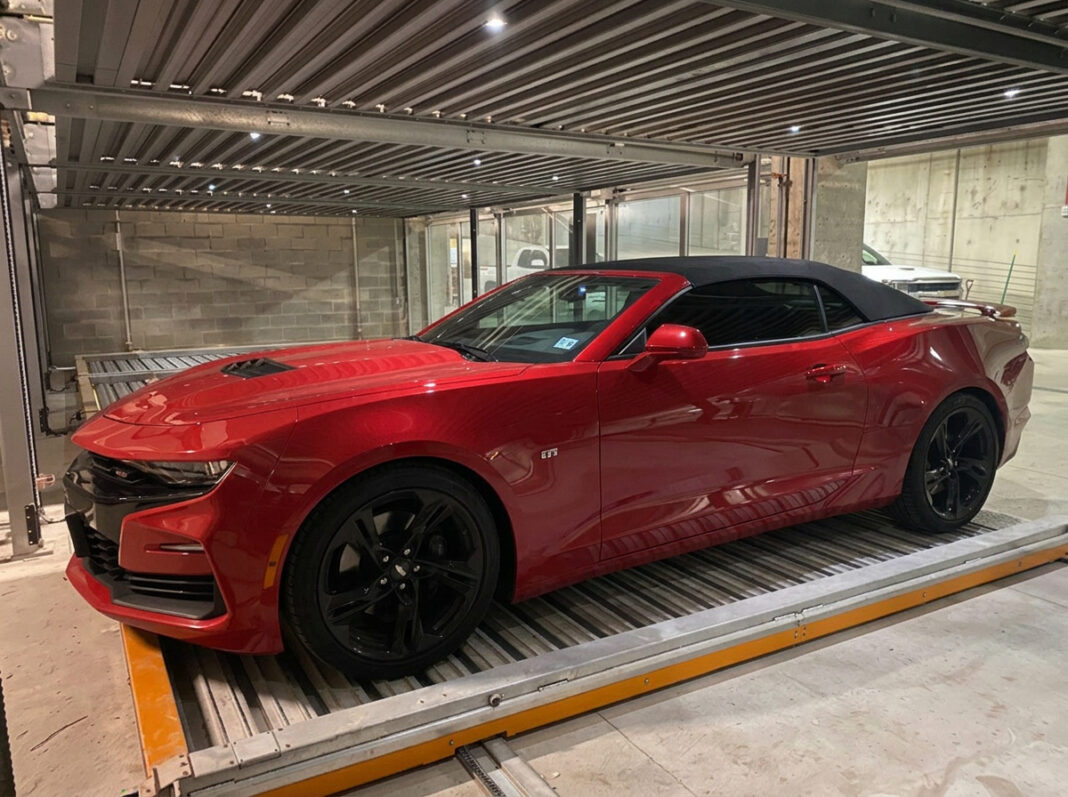


As off-campus housing developments compete for limited urban land, one Gainesville project turned a familiar constraint into a design advantage.
When a developer broke ground on a new off-campus housing community near the University of Florida in Gainesville, the challenge was one that urban student housing projects know well: how do you deliver the parking that residents and municipalities require without sacrificing the residential density that makes a project financially viable?
The answer, in this case, was to rethink the parking structure entirely.
A Familiar Problem at a Critical Site
The development was designed around high residential density, offering fully furnished two-, three-, and four-bedroom units alongside indoor and outdoor shared spaces built for both academic focus and social connection. From a leasing standpoint, the unit mix was strong. From a site planning standpoint, conventional parking threatened to undermine it.
Traditional parking garage configurations, with their ramps, internal drive aisles, and structural demands, would have consumed a footprint that the project couldn’t spare. The tradeoff was straightforward and unacceptable: fewer leasable units, a larger building envelope, and higher construction costs, all in exchange for a parking solution that didn’t need to be that complicated.
Integrating Automation Early in Design
KLAUS Multiparking America‘s Southeast team was brought in early in the design process, a collaboration model that consistently produces better outcomes than retrofitting a parking solution after the building design is set. Working directly with the developer and project architects, the team integrated a TrendVario automated parking system within the building’s existing envelope.
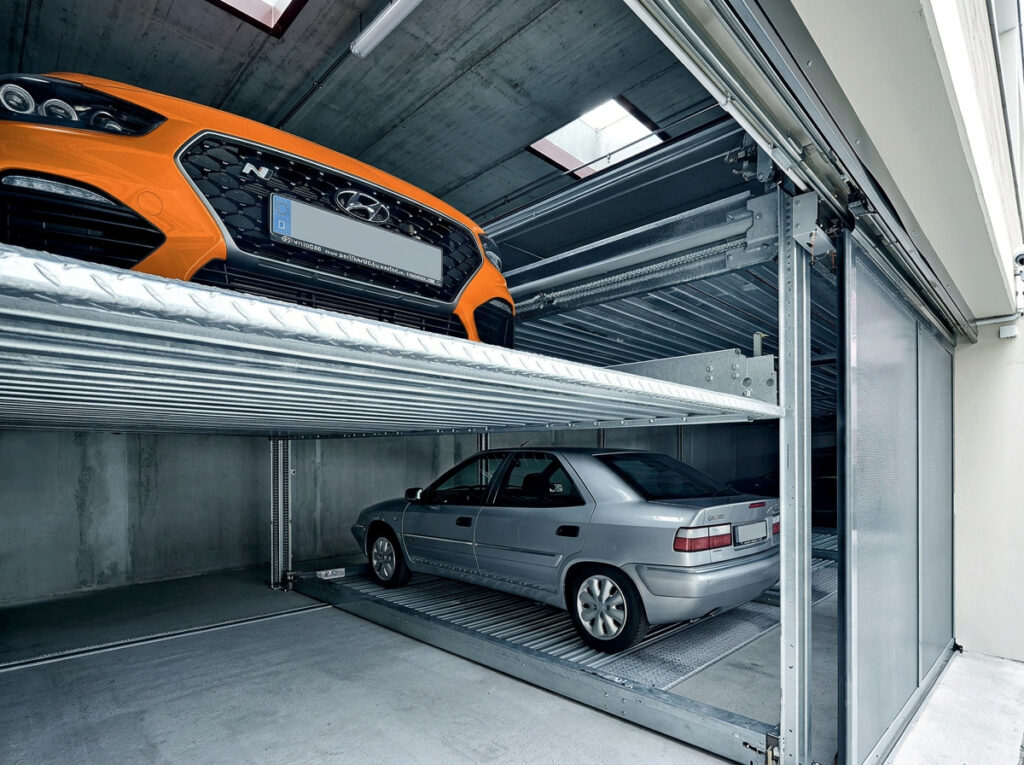
The selected configuration provided 46 self-park spaces across two above-grade levels, with no pit excavation required. That last detail matters more than it might appear. Eliminating underground construction removes a significant cost variable, reduces schedule risk, and simplifies permitting. For a project already navigating the density pressures of urban student housing, it was a meaningful efficiency.
Results That Speak to the Development Model
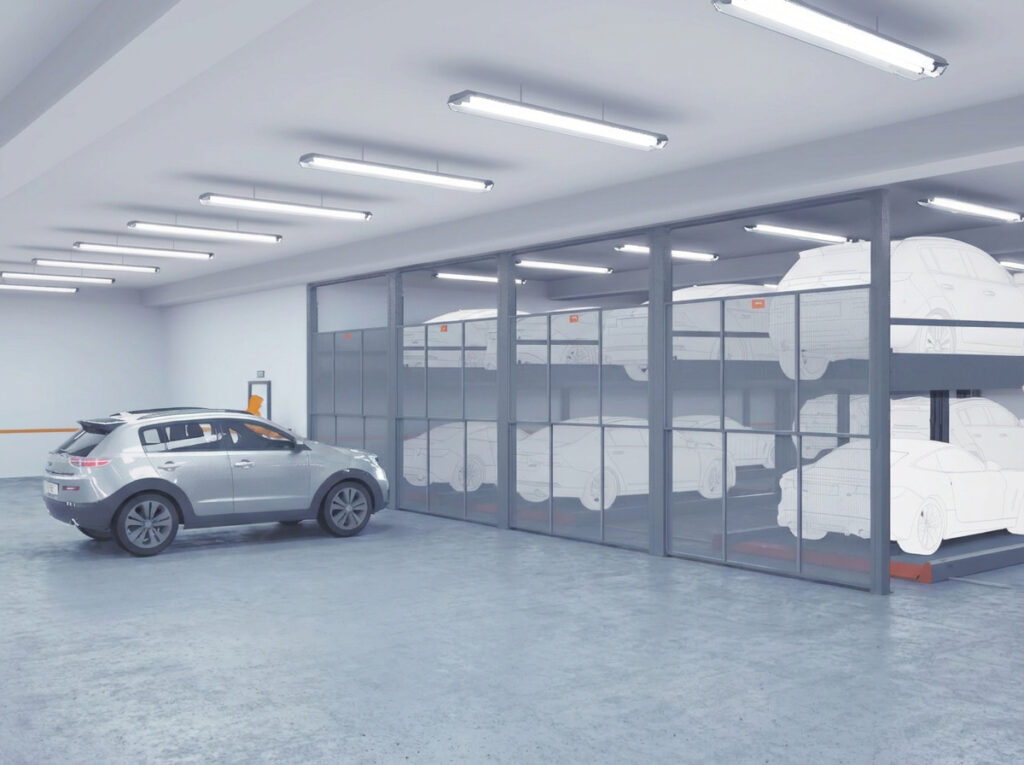
The automated system delivered on multiple dimensions simultaneously. Ramps and wide circulation aisles were eliminated, freeing square footage that would otherwise have been lost to infrastructure. The two-level configuration kept the structural demands manageable. And because the system was designed into the building from the start, rather than added as an afterthought, it aligned with the project’s architectural intent rather than conflicting with it.
Residential density and unit count were preserved. Construction costs were managed. And the land use efficiency of the completed project compared favorably to what a conventional garage would have required, with a lower embodied carbon footprint to match.
The Broader Lesson for Student Housing Development
Student housing near major universities increasingly shares the same spatial economics as urban multifamily: high land costs, zoning-driven density requirements, and the constant tension between amenity programming and parking compliance. In that environment, automated parking isn’t a novelty; it’s a legitimate planning tool.
The Gainesville project illustrates what becomes possible when that tool is introduced early. Parking infrastructure decisions made at the design phase protect unit yield, control downstream costs, and give development teams flexibility that disappears once structural commitments are locked in.
For developers and architects navigating constrained sites near college campuses, where demand is strong and buildable land is limited, the takeaway is practical: the conversation about parking belongs at the design table, not after it.
About KLAUS Multiparking America
KLAUS Multiparking America is a leading provider of German-engineered automated parking systems in North America, with more than 60 years of global expertise in puzzle parking, semi-automatic, and fully automated configurations. The company works with developers, architects, and property owners across multifamily, student housing, hospitality, and commercial markets to deliver space-efficient, high-performance parking solutions tailored to each project.
Disclosure: Individuals or companies mentioned may have a commercial relationship with KeyCrew.