
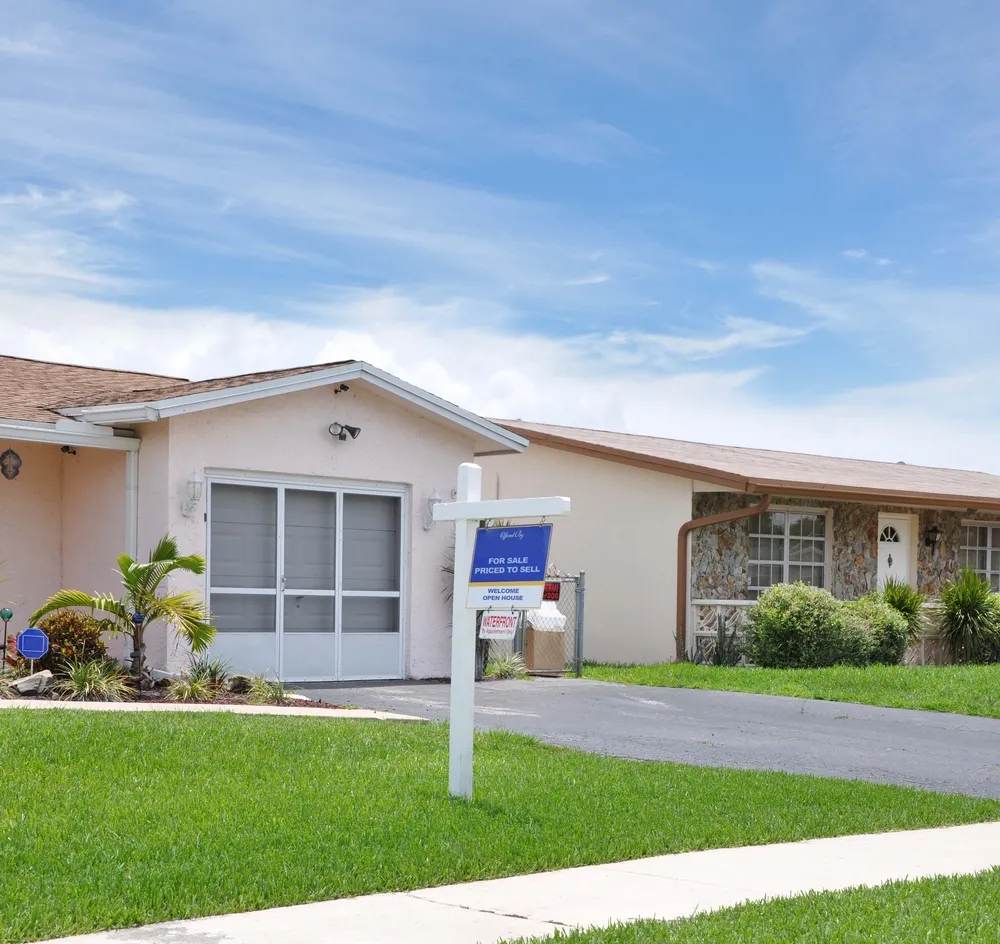


Fort Lauderdale and Hollywood, Florida, are two coastal cities just north of Miami that built much of their economy on tourism and vacation rentals. During the pandemic, investors bought up single-family homes in these neighborhoods and listed them on Airbnb, betting that Florida’s status as one of the few open states in the country would keep occupancy and nightly rates high. That bet worked for a while. But as the rest of the country reopened and international travel resumed, tourists stopped concentrating in South Florida by default, and many of those Airbnb properties stopped generating enough income to cover their costs.
Investors who bought at pandemic-era prices are now selling into a market flooded with similar properties, and the resulting oversupply has pushed prices down by tens of thousands of dollars in some cases. Hector Valdes, a Principal and Luxury Realtor with the Hector Valdes Team at Coldwell Banker Realty, has watched the shift play out across Fort Lauderdale and Hollywood and explains what separates properties that are still performing well as short-term rentals from those left sitting on the market.
A Pandemic-Era Bet
In 2020 and 2021, South Florida occupied an unusual position in American real estate. While most of the country was locked down, Florida remained open, and tourists came. For investors watching the numbers, buying single-family homes in coastal neighborhoods and listing them on Airbnb was compelling. Occupancy was high, nightly rates were strong, and competition from other vacation destinations had effectively disappeared.
According to Hector Valdes, Principal and Luxury Realtor with the Hector Valdes Team at Coldwell Banker Realty, the frenzy was driven by Florida’s unique pandemic-era status. “We were really busy in Florida. The rest of the country was shut down, and we were open down here. So we were like super, super busy.”
The result was a concentrated wave of speculative purchases in tourist-friendly neighborhoods, particularly in Fort Lauderdale and Hollywood, two markets with established vacation rental demand, beach proximity, and single-family homes well suited to short-term stays. Investors paid prices that only made sense given the extraordinary rental income that moment was generating.
Tourists Return Elsewhere
The investment plan fell apart as the conditions supporting it disappeared. International travel resumed, the rest of the United States reopened, and tourists who had concentrated in South Florida by default began spreading back out. The captive audience that had driven pandemic-era Airbnb returns simply stopped being captive.
“As the rest of the country opened up, Europe started opening up, people started vacationing less in South Florida,” Valdes says. “A lot of those Airbnbs I noticed, I’ve had those listings, were not making the money that they were prior.”
Investors who had based their purchases on 2020 and 2021 occupancy rates were now operating properties that could not generate enough income to cover mortgage payments or other ownership costs. For some, selling became unavoidable. For others, the choice was to keep holding and hope for a recovery that has been slow to arrive.
The Inventory Glut
The exit of underperforming Airbnb owners produced a predictable consequence: a surge in homes for sale in the neighborhoods where speculative buying had been most concentrated.
“The areas that I saw the most affected by this were definitely Fort Lauderdale and Hollywood,” Valdes says. “All of a sudden we have a lot of inventory, it’s like supply and demand, we have lots of listings, and then the pricing starts to go down.”
The price drops have been substantial. Valdes describes homes on the east side selling for $50,000 to $100,000 below asking price, a level of negotiating room that would have been unimaginable during the pandemic peak. Buyers in these markets have gained significant leverage, and sellers who need to exit are finding that the market will not support prices that seemed reasonable just a few years ago.
The oversupply has also made homes take longer to sell. Buyers in Fort Lauderdale and Hollywood are moving slowly, aware they have options and that waiting will not cost them the deal. Valdes says it has been a buyer’s market for the past two to three years across these areas.
For buyers considering these neighborhoods now, the leverage is real. Still, it requires patience. Homes built between the 1950s and 1970s often come with aging problems like outdated pipes and old roofs that can eat into the savings from a lower purchase price.
What Separates Winners
Valdes steers investors toward properties where short-term rental demand is supported by lasting local draws rather than temporary market conditions. His recent transaction in Miami’s Design District illustrates the approach: a newer building, built in 2020, with a rule requiring guests to stay at least three nights, located in a neighborhood with few hotels and steady visitor traffic driven by shopping and dining rather than beach tourism alone. The purchase price was $465,000 for a fully furnished one-bedroom with views of Biscayne Bay.
“You basically walk a block, and you’re in the Design District,” Valdes says. “There’s not a lot of accommodation in that area. There’s not a lot of hotels.”
The three-night minimum filters out the shortest-stay guests. The neighborhood’s draw, high-end retail and restaurants, generates year-round foot traffic no matter whether South Florida is competing with reopened international destinations.
The contrast with Fort Lauderdale and Hollywood is direct. In those markets, short-term rental supply expanded rapidly while demand proved more cyclical than investors expected. Properties whose returns depended on South Florida being the only available vacation destination are the ones now sitting on the market at steep discounts.
For buyers and investors evaluating South Florida’s short-term rental market today, the distinction that matters is whether a property’s income depends on a specific, lasting source of local demand or on the broader appeal of South Florida as a destination. The former has held up through the post-pandemic correction. The latter has not, and the homes left behind by that miscalculation continue to weigh on prices in Fort Lauderdale and Hollywood.
About the Expert: Hector Valdes is Principal and Luxury Realtor with The Hector Valdes Team at Coldwell Banker Realty, serving the South Florida residential market across Broward and Miami-Dade counties.
This article is based on information provided by the expert source cited above. It is intended for general informational purposes only and does not constitute legal, financial, or real estate advice. Readers should conduct their own research and consult qualified professionals before making any real estate or financial decisions.