
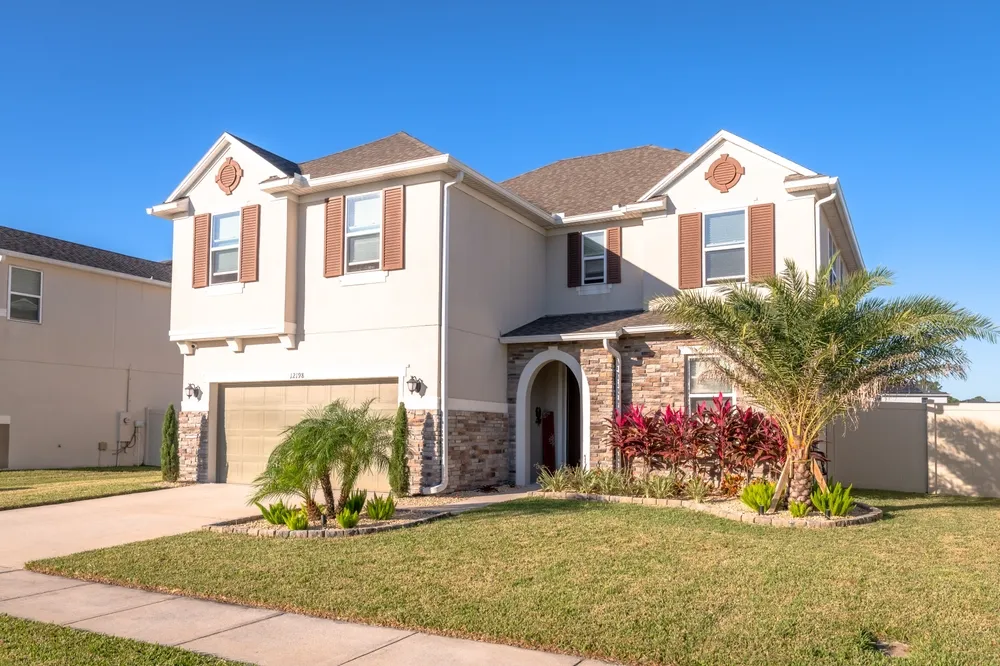


Florida has a well-earned reputation for low taxes, but that reputation is misleading buyers relocating to one of the state’s fastest-growing regions. St. Lucie County carries the highest millage rate in Florida – a fact that makes property ownership there more expensive on a tax basis than Miami, despite the county’s comparatively modest home prices and quieter lifestyle.
Natalia Rhinehart, a Realtor with eXp Realty working in Martin and St. Lucie Counties, says the tax conversation has become one of the most loaded and time-consuming parts of her buyer consultations. Out-of-state buyers arrive with assumptions shaped by Florida’s broad tax narrative, and those assumptions frequently collide with the specific realities of the Treasure Coast.
“St. Lucie County has the highest millage rate in the state of Florida,” Rhinehart says. “By calculations, it’s technically more expensive than Miami.”
Florida’s Tax Reputation vs. Reality
Florida’s lack of a state income tax is a well-known draw for relocating buyers, particularly those leaving high-tax states in the Northeast and Midwest. But that broad narrative obscures significant variation at the county level – variation that can materially affect a buyer’s monthly carrying costs and long-term affordability.
Millage rates determine how much property tax is assessed per $1,000 of taxable value and vary considerably across Florida’s 67 counties. A buyer comparing two properties at the same price point in different counties may face meaningfully different annual tax bills, and that difference compounds over time. In St. Lucie County, Rhinehart says, the millage rate is high enough to produce tax obligations that exceed what a comparable property in Miami-Dade would generate – a counterintuitive outcome that surprises even financially sophisticated buyers.
The reaction splits along geographic lines. Buyers from New York, New Jersey, and other high-tax states tend to find even St. Lucie County’s elevated millage rate manageable relative to what they’re accustomed to paying. Buyers from lower-tax states, however, often find the numbers jarring. “Taxes – either they are shocked on how low it is, which are the northerners, or they are shocked on how high it could be,” Rhinehart says.
Closing Timelines Surprise Buyers
Beyond the tax surprise, Rhinehart says northern buyers are often caught off guard by Florida’s closing timeline. In states like New York and New Jersey, financed transactions typically close in 60 to 90 days and involve attorney-supervised processes with multiple procedural steps. Florida operates on a faster model entirely.
A financed purchase in Florida can close in 30 days – roughly half the timeline buyers from the Northeast expect. For some, the compressed schedule is welcome. For others – particularly those coordinating a move from out of state, managing a lease termination, or waiting on proceeds from a home sale – 30 days can feel impossibly fast.
“What especially northerners don’t understand is how in Florida you can close on a home, even if it’s financed, in 30 days,” Rhinehart says. “That’s not common in New York or New Jersey.”
This mismatch has become a negotiating variable in its own right. Buyers from the Northeast are increasingly requesting 60 to 90-day closing windows, and Rhinehart says a number of listings in Palm City now reflect expected closing dates well beyond the standard Florida timeline – a direct accommodation of out-of-state buyer preferences.
Agents Educate Buyers First
The cumulative effect of these surprises – millage rates, closing timelines, insurance estimates, and negotiation norms that differ from northern markets – has pushed the early stages of Rhinehart’s buyer consultations toward education rather than property search. She says the learning curve for out-of-state buyers is steep enough that skipping it creates downstream problems: buyers who discover the full cost picture only after placing an offer are more likely to back out, renegotiate, or experience buyer’s remorse.
Her approach involves requiring buyers to obtain a good faith estimate from their lender before submitting any offer. That estimate, which populates with address-specific tax and insurance figures, gives buyers a realistic monthly payment picture before they’re emotionally committed to a specific property.
“A good faith estimate is key before you really even do an offer,” she says. “It saves you time from them saying, ‘Oh no, I can’t afford it. How crazy is this number?’”
Front-Loading the Cost Conversation
Rhinehart’s relocation-focused practice is built around the premise that informed buyers close – and that the cost conversation, however uncomfortable, is better had before a showing than after an offer. Her background as someone who has personally relocated across multiple states informs how she structures those early consultations, and she credits her YouTube presence – built before and during the COVID period – with attracting buyers who have already done some baseline research on the Treasure Coast before reaching out.
The broader implication is that Florida’s tax narrative, as it’s typically communicated to prospective buyers, may be creating unrealistic expectations that agents are left to manage transaction by transaction. As property tax reform proposals continue to circulate at the state level – Rhinehart notes that the potential elimination of a portion of Florida’s property taxes has become a significant topic in buyer conversations – the cost picture for Treasure Coast buyers may shift again.
Until that happens, the gap between Florida’s tax reputation and the specific realities of high-millage counties like St. Lucie will likely remain one of the more persistent friction points in the relocation market. For buyers considering the Treasure Coast, the takeaway is straightforward: Florida’s low-tax brand does not apply uniformly, and the county-level numbers deserve as much scrutiny as the listing price itself.
About the Expert: Natalia Rhinehart is a Realtor with eXp Realty serving Martin and St. Lucie Counties on Florida’s Treasure Coast, with a practice focused on out-of-state and relocation buyers.
This article is based on information provided by the expert source cited above. It is intended for general informational purposes only and does not constitute legal, financial, or real estate advice. Readers should conduct their own research and consult qualified professionals before making any real estate or financial decisions.