
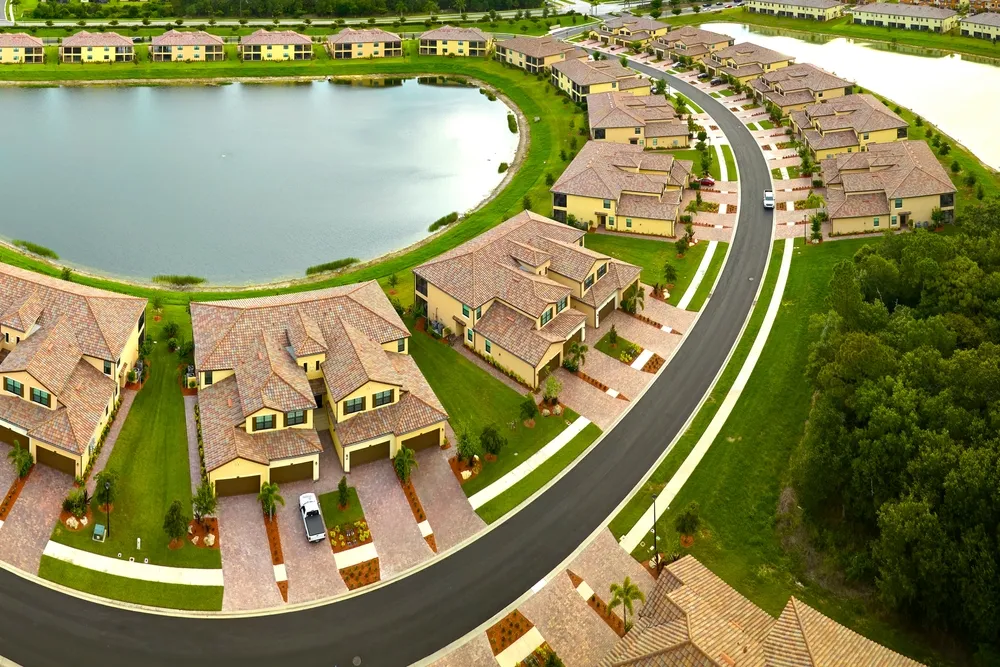


When the Florida housing market was booming, builders raced to put up new homes across the Space Coast, the stretch of Brevard County coastline anchored by cities like Palm Bay, Melbourne, and Titusville. Now those same builders are sitting on more than 400 unsold properties, and to move them, they’re offering buyers deals that individual homeowners simply cannot match: discounted interest rates, covered closing costs, and price cuts that still leave room for profit. For existing homeowners trying to sell, that competition isn’t just inconvenient; it’s pushing some of them into foreclosure.
The conventional narrative about Florida’s cooling housing market focuses on interest rates and affordability. But Shirley Weems, a manager, broker, and owner of the Palm Bay office with Waterman Real Estate, Inc., who handles several hundred transactions per year on Florida’s Space Coast, argues that the more damaging force is the mismatch between what builders can offer buyers and what existing homeowners can afford to accept. With more than 400 brand-new properties currently sitting unsold in the area, that mismatch is determining who can sell, who cannot, and what happens to those caught in between.
The Builder’s Structural Pricing Advantage
Builders have access to tools that individual homeowners simply cannot access. Through partnerships with mortgage companies, builders can pay upfront to secure a lower interest rate for the buyer, effectively reducing the monthly payment on a new home without cutting the sticker price. They can also cover closing costs and absorb price reductions that would be impossible for a homeowner carrying a mortgage from the pandemic peak.
According to Weems, a home that cost $200,000 to build may have sold for $400,000 during the boom. That same builder can now sell at $350,000 or even $300,000 and still turn a profit. “They can afford to sell them for $300,000 and still make money,” Weems says.
That flexibility does not exist for a homeowner who purchased at $350,000 two years ago. Their mortgage balance sets a hard floor on what they can accept. If the market will not support that price – and Weems argues it increasingly will not – the homeowner’s options narrow quickly.
Sellers who bought recently must recover at least what they owe. When they cannot, and they have no cash to bring to closing, the path leads to foreclosure. “They won’t be able to pay off the mortgage,” Weems says, “which is causing pre-existing homeowners to now go into foreclosure.”
Why Buyers Are Choosing New Over Resale
The disadvantage for existing homeowners goes beyond price into buyer psychology. When a buyer can choose between a remodeled older home and a brand-new home at the same price point, the new home wins almost every time. This dynamic is particularly damaging for investors who buy older properties, renovate them, and resell them for a profit, only to find themselves competing directly with new construction at comparable prices.
“Why would I buy your used home when I could buy a brand-new one for the same price?” Weems says.
For investors using this strategy, Weems says competing with new construction is the most important risk factor to evaluate before buying a property. A 1995-built home, regardless of how thoroughly it is renovated, will face a ceiling on resale value set by new construction in the same price range. She advises these investors to target price points where new construction is not competing, generally below the range where builders are currently active, rather than trying to match new homes on finish quality alone.
The Cascading Effect on Sellers
Beyond investors, the hardest-hit group consists of homeowners who do not have the option of waiting out the market. Sellers facing job relocations, divorces, or deaths in the family must transact regardless of conditions. When those sellers cannot find buyers willing to pay enough to cover their mortgage balance, the outcome is often foreclosure.
“If you have to sell but you can’t sell, and you walk away from your home, the home is going to have to go into foreclosure,” Weems says.
In her view, this is not a marginal phenomenon – it is a structural feature of the current market that will persist as long as builder inventory remains elevated. Interest rates stay high enough to suppress buyer purchasing power. The 400-plus unsold new homes are not just a supply problem; they are a pricing anchor that makes it difficult for any resale seller to compete without accepting a loss.
Navigating a Two-Tiered Market
Given these conditions, Weems says her approach involves helping sellers understand their actual competitive position before listing – including an honest assessment of whether new construction in their price range makes their property effectively unsellable at their target price. For investors, she steers clients toward rental-focused purchases rather than flips in price ranges where new construction is active.
Her broader argument is that this two-tiered market, where builders and individual sellers operate under fundamentally different economic constraints, is not a temporary condition. As long as builders maintain cost bases well below current market prices and retain access to mortgage company partnerships, the structural advantage they hold over resale sellers will continue to produce foreclosures and stalled listings across the Space Coast. For resale markets more broadly, this dynamic raises questions about how existing inventory is absorbed in areas where speculative overbuilding has created sustained competition from new construction at the same price points.
About the Expert: Shirley Weems is a Realtor with Waterman Real Estate, Inc., serving the Space Coast and Brevard County market in Florida since 2006.
This article is intended for informational purposes only and does not constitute legal, financial, or investment advice. The views and opinions expressed herein reflect those of the individuals quoted and do not represent an endorsement of any company, product, or service mentioned. Readers should conduct their own due diligence and consult qualified professionals before making any investment decisions.