
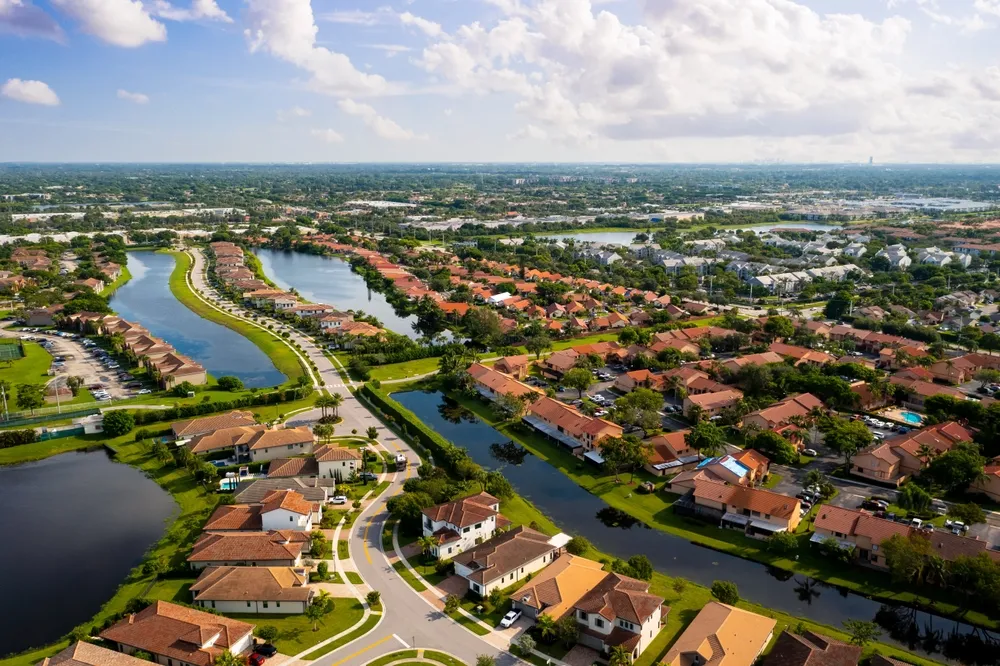


The dominant narrative around South Florida real estate centers on luxury condos, Brickell high-rises, and out-of-state migration into Miami proper. But according to Daniel Trottman, Broker and Owner of Vortex Realty and Management, the more durable story is happening in the suburbs – specifically in Pembroke Pines, where a distinct buyer profile is arriving that the Miami condo market was never designed to accommodate.
Trottman argues that Pembroke Pines is not simply benefiting from Miami’s overflow. It is attracting buyers with fundamentally different priorities, and the market is maturing to meet them.
A Different Kind of Buyer
The buyers Trottman describes are not chasing prestige or proximity to nightlife. They are families with school-age children, professionals who need access to multiple employment corridors, and households relocating from states like Wyoming, Iowa, and Colorado where large-format living is the norm.
“We’re not a condo community,” Trottman says. “We are still considered the suburbs, so individuals that have children, young children – if they have a runway still with that child to get through elementary school, junior high, high school – we’re more suited for that family.”
For buyers coming from the Mountain West or Midwest, the transition into South Florida does not automatically mean a high-rise unit. Just north of Pembroke Pines, communities like Southwest Ranches and Rolling Hills offer estate-sized properties on two acres or more. Pembroke Pines functions as the logical entry point for households connected to those areas – close enough for family proximity, but more accessible in price and more practical for day-to-day life.
Geography as an Advantage
One of the more underappreciated aspects of Pembroke Pines is its geographic positioning relative to South Florida’s major economic hubs. The city sits at a point where residents can reach Fort Lauderdale-Hollywood International Airport in roughly 20 minutes and Miami International Airport in 35 to 40 minutes depending on traffic. For professionals whose work takes them in multiple directions, that dual access is a meaningful differentiator.
“When you are 20 minutes away from Fort Lauderdale Airport, or 35 to 40 minutes to Miami International Airport, you really have that pendulum that can take you either way when it comes to travel,” Trottman says.
He also points to Alligator Alley – the highway corridor connecting Broward County to Naples on Florida’s west coast – as a practical asset for business owners who operate across the state. A 90-minute drive puts Pembroke Pines residents in Naples for a full business day and back home by dinner, a logistical reality that Trottman says factors into relocation decisions more than most market analyses acknowledge.
Commercial Growth, Residential Signal
Beyond residential appeal, Trottman reads commercial activity as evidence of the type of household the area is attracting. His reference point is Costco, which he describes not just as a retail anchor but as a demographic indicator.
“Costco puts their locations where affluence is,” Trottman says. “So we are attracting that buyer, that homeowner, that household where individuals with good disposable income are coming into the area.”
He also notes that television stations and other media operations are relocating facilities further west into the Miramar and Pembroke Pines corridor, suggesting that the commercial infrastructure of the region is expanding in ways that reinforce residential demand. For buyers evaluating long-term stability, the presence of established employers and national retailers tends to reduce the perceived risk of a purchase.
The broader implication is that the move-up buyer – the household trading density for space, or trading a starter home for something with room to grow – may be the most resilient segment of the residential market right now. These buyers are not speculating on appreciation. They are making decisions driven by life stage, family structure, and practical geography.
Looking Ahead
Trottman says Vortex Realty has built its residential practice around exactly this buyer and seller profile, working with households moving up within the market, absentee landlords managing investment properties, and sellers navigating transitions out of long-held homes.
“Pembroke Pines becomes the move-up area,” Trottman says, describing the market’s role in the regional hierarchy.
Whether other suburban markets in South Florida are developing similar profiles is worth watching. If Trottman’s read is accurate, the suburbs that combine geographic accessibility, family-oriented infrastructure, and proximity to estate-level housing may be better insulated from market softness than the headline luxury segments currently drawing the most attention. For buyers priced out of or poorly served by Miami’s condo-heavy inventory, Pembroke Pines represents a market that matches how they actually live – not where the marketing dollars are pointing them.
About the Expert: Daniel Trottman is Broker and Owner of Vortex Realty and Management, serving the Pembroke Pines and broader Broward County market since the early 2000s. His practice spans residential sales, property management, and commercial leasing.
This article is intended for informational purposes only and does not constitute legal, financial, or investment advice. The views and opinions expressed herein reflect those of the individuals quoted and do not represent an endorsement of any company, product, or service mentioned. Readers should conduct their own due diligence and consult qualified professionals before making any investment decisions.