
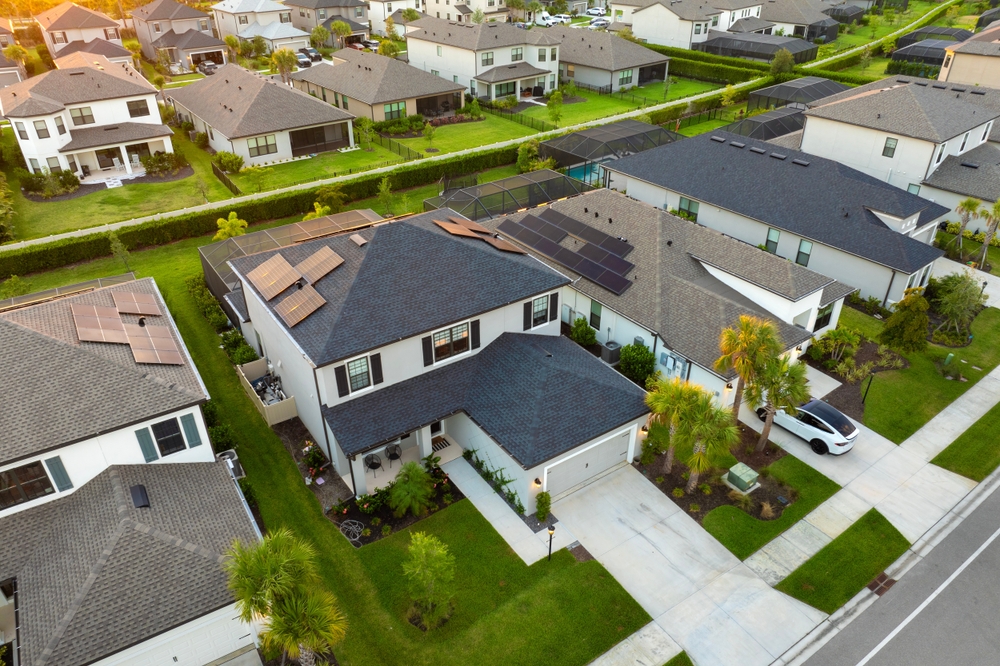


In Polk County and across Florida’s secondary markets, a growing number of real estate transactions are collapsing not at financing or inspection – but at the insurance stage, where carriers are demanding full roof replacements on homes barely a decade old. According to Carla Meeks, broker and owner of Meeks Real Estate in Bartow, Florida, this has become one of the most disruptive forces in her market, turning routine closings into drawn-out standoffs between sellers, buyers, and insurers.
The friction is distinct from more commonly discussed deal-killers like rate sensitivity, buyer hesitation, or appraisal gaps. It arrives late in the transaction process, after pre-approval has been secured and inspections are underway, which makes it particularly damaging to deal momentum. “Roofing, it’s been a big one,” Meeks says.
A Late-Stage Problem
What makes the roof issue especially disruptive is that it surfaces after both parties have already committed significant time and resources. Under Florida law, buyers must now sign a buyer’s agreement before beginning their home search, locking them into working with a specific agent. By the time a roof dispute emerges, the buyer has already been pre-approved, toured the property, and entered into a contract.
Meeks describes a process where nearly every qualified buyer can afford the home they’ve chosen – until an insurer flags the roof. At that point, the deal doesn’t automatically die, but it enters a contested phase. A roofer must be brought in to assess remaining useful life, introducing another party, another timeline, and another potential point of disagreement. If the roofer’s findings don’t satisfy the insurer, the seller faces a choice: pay for a replacement, negotiate a price reduction, or walk away from the deal entirely.
For sellers who purchased or re-roofed their home a decade ago and expected 20 to 25 years of useful life, the insurer’s position can feel arbitrary. For buyers, it introduces a cost variable – either as a seller concession or a future replacement – that wasn’t priced into their original offer.
Why Secondary Markets Suffer
The roof insurance problem is not unique to Polk County, but it may be hitting secondary markets with particular force. In major metros like Tampa or Orlando, higher home values give both buyers and sellers more financial cushion to absorb unexpected costs. In Polk County, where homes are typically priced lower than in major cities, the margin for absorbing a $15,000 to $25,000 roof replacement is considerably thinner.
The profile of buyers active in these markets compounds the problem. Meeks describes her client base as spanning a wide range of income levels and financing types – VA, USDA, FHA, and conventional – many of whom are first-time buyers or retirees downsizing from larger markets. These buyers are often working with limited reserves, meaning a surprise roof requirement can push a deal beyond what they can absorb, even if the underlying financing remains intact.
Seller concessions have increased in recent months, Meeks says, but she characterizes the uptick as modest – mostly limited to rate buydowns or closing cost assistance. A full roof replacement is a different category entirely: a structural demand that can exceed the seller’s willingness or ability to negotiate.
Florida’s Resale Market Impact
Florida’s insurance market has been under significant stress for years, driven by hurricane exposure, litigation costs, and carrier exits from the state. The tightening of roof age requirements appears to be one downstream consequence, as remaining insurers attempt to reduce their exposure to weather-related claims by requiring newer roofing materials before issuing policies.
For the resale market, this creates a structural disadvantage relative to new construction. Meeks notes that newer homes are performing better than resale properties in her market, in part because builders can offer incentives that private sellers cannot match. An insurable roof is another advantage that new construction holds over existing inventory – and another friction point that resale sellers must navigate.
Meeks has developed a practice of addressing roof age and insurance eligibility early in the transaction process rather than waiting for the issue to surface at closing. Her approach involves coordinating with inspectors and, when necessary, bringing in roofers before the deal reaches a critical stage – treating roof assessment as a proactive measure rather than a reactive one.
For the broader Florida resale market, the question is whether this kind of early-stage roof triage becomes standard practice. As insurance carriers continue to tighten underwriting requirements, agents who build roof assessment into their transaction workflow from the outset may find themselves closing deals that less-prepared competitors lose out on. On the alternative – discovering a roof problem days before closing – is becoming an increasingly expensive surprise in a market where buyers have little financial margin to spare.
About the Expert: Carla Meeks is a broker and owner of Meeks Real Estate LLC, serving the Bartow area and broader Polk County market in Central Florida for more than two decades.
This article is intended for informational purposes only and does not constitute legal, financial, or investment advice. The views and opinions expressed herein reflect those of the individuals quoted and do not represent an endorsement of any company, product, or service mentioned. Readers should conduct their own due diligence and consult qualified professionals before making any investment decisions.