
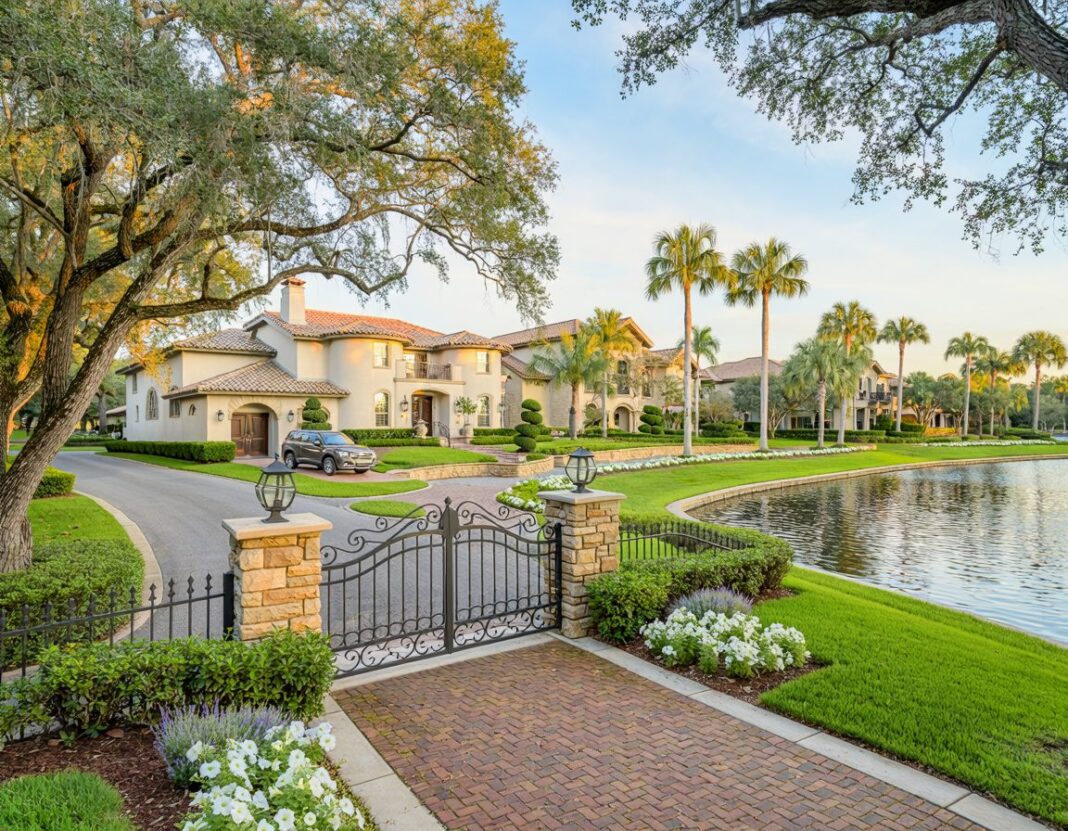


A Windermere broker explains why the list price, not the back-and-forth, usually decides who holds the leverage in a home sale.
Many homeowners in Orlando, Florida, and nearby communities like Windermere and Winter Garden enter a sale with the same plan: list high, expect lower offers, and meet somewhere in the middle. It sounds cautious. In practice, it often leaves sellers with fewer offers, less leverage, and a lower final price than a realistic number would have produced from day one.
Bent Danholm, broker and founder of Danholm Collection, a Central Florida brokerage focused on luxury homes, calls this the negotiation illusion. It is one of the core ideas in his new book, The Architecture of Demand, and he says the pattern shows up in every price range.
Why “Room to Negotiate” Rarely Works
The thinking behind a high list price is that it gives the seller a cushion. Danholm’s experience is that the cushion rarely gets used the way sellers expect.
“The problem is negotiation rarely happens if you do that,” he says. A home listed above what the market supports tends to attract one offer instead of several, and that buyer knows the price is too high.
Picture a home where $1 million is the very top of what the market might pay. If the seller lists it there to leave room to negotiate, the one buyer who shows up may offer $850,000, and the deal may settle around $925,000. In that scenario, Danholm says, the buyer is “in the driving seat.”
Buyers Can See Every Price Change
The second problem is what Danholm calls the anchor effect. The first list price becomes the reference point for everything that follows, and buyers can see it.
“No matter what platform you look at a house on, you have the history of where this house was,” he says. If a seller starts too high and later reduces, even by a small amount, the home can carry a reputation for being overpriced that is hard to shake. Some buyers go a step further and assume something is wrong with the property.
Danholm says the first two weeks matter most. If the price is off and the seller doesn’t adjust early, the home risks being seen as overpriced no matter what happens next.
Pricing Just Below the Top of the Range
Danholm’s alternative runs against instinct. Using the same home, he suggests listing closer to $950,000 rather than at the top of the range.
“It’s actually much wiser to go in at 950 and count on getting multiple offers because that leaves the seller in the driving seat,” he says. With competing buyers, he believes there is a reasonable chance the home sells for $1 million or even $1.05 million.
The point is not that every home should be priced low. A price that invites several serious buyers usually gives the seller more negotiating power than a price that invites one.
What Has to Be in Place Before the First Offer
Danholm argues that leverage is mostly decided before any buyer writes an offer. By that point, a seller should already have four things right:
-
Price. A number the market can support, set with an eye toward attracting more than one buyer.
-
Positioning. A clear picture of who the most likely buyer is and how the home fits their life.
-
Presentation. Photos, video, and a listing story that show buyers what living there would be like.
-
Less friction. Visible issues addressed or accounted for, so buyers don’t inflate repair costs in their heads.
“Even with the best marketing, if you overprice, you’re not going to sell,” he says.
For sellers who want a starting point, a professional home valuation based on recent sales and current neighborhood competition is a more reliable guide than a number chosen to leave room for negotiation.
The Takeaway for Sellers
A high list price feels like protection, but it often hands control to the buyer. Sellers who price for competition, present the home well, and remove obvious objections early tend to keep the leverage they were hoping to protect in the first place.
About Danholm Collection
Danholm Collection is a luxury real estate brokerage based in Central Florida, specializing in properties above $1.5 million. Founded by Bent Danholm, author of The Architecture of Demand, the firm is known for its buyer-avatar-driven marketing and full concierge approach to luxury home sales.
Disclaimer: This article is based on information provided by the expert source cited above. It is intended for general informational purposes only and does not constitute legal, financial, or real estate advice. Readers should conduct their own research and consult qualified professionals before making any real estate or financial decisions.
Disclosure: Individuals or companies mentioned may have a commercial relationship with KeyCrew.