

The South Florida industrial real estate market is moving past the volatility that followed the pandemic-era surge, with investors and owners settling into a new phase defined by more realistic pricing and renewed deal activity. After a period of uncertainty, brokers and buyers are reporting a measurable uptick in transactions and a clearer sense of true market value.
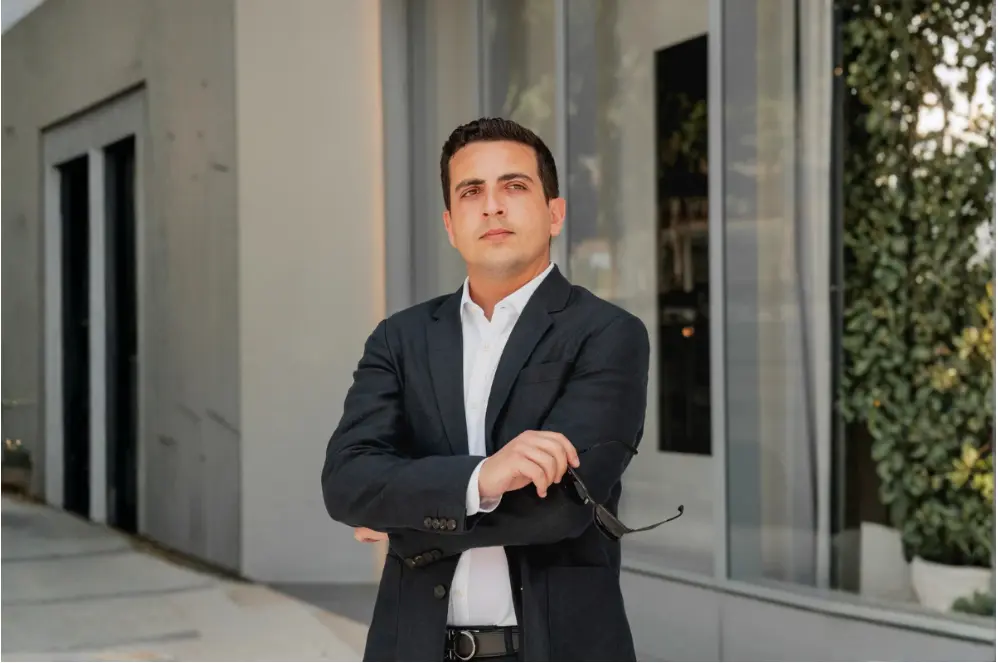
“Twelve months ago, there was still some uncertainty about how the South Florida market would stabilize.” says Jason Abitbol, Senior Investment Advisor at APEX Capital Realty. “A lot of sellers were still holding out for COVID-level, post-COVID-level pricing where the market spiked, and there’s had to be a little bit of a reality check for serious sellers.”
That reality check has shifted the market toward greater stability. Abitbol reports a 25 to 30% increase in deal flow for his team compared to last year, as both buyers and sellers adjust to current conditions. This renewed activity signals that the South Florida industrial sector is regaining its footing, with participants more willing to transact at today’s prices rather than clinging to the peak values of 2021 and 2022.
Market Activity Concentrates on Quality and Location
The recent correction has made investors more selective, with demand now focused on high-quality assets in prime locations. Abitbol’s February closing of a $24 million office transaction illustrates this point: “Buyers are looking at the quality of the asset and the quality of the location as the main drivers,” he says.
Institutional investors, once focused exclusively on properties of 100,000 square feet or larger, are now considering smaller industrial assets in the 50,000 to 60,000 square foot range. This shift reflects a willingness to pursue opportunities in the mid-market and a desire to capture value as the market stabilizes. Abitbol notes that most of his team’s deal volume now falls in the $2 to $20 million range, while transactions above $100 million have become more exclusive.
This renewed focus on quality over scale is a marked change from the frenzied pace of the pandemic years, when buyers often competed for any available property. Now, a property’s fundamentals—its construction, location, and tenant profile—determine its appeal.
Vacancy Rates Signal Healthy Rebalancing
Official figures show Miami industrial vacancy rising from 3.3% to 5.7% over the past year, a trend that brokers see as a natural market correction rather than a sign of distress. Abitbol describes the previous environment as unsustainable: “We saw tremendous growth in rental prices and very low vacancy. It got to a point where the market spoke and tenants no longer wanted to rent properties in the mid-$20 per square foot range for a very basic warehouse. We’re talking about retail pricing here.”
Tenant resistance to elevated rents has forced landlords to recalibrate, resulting in higher vacancy but also in more sustainable pricing. Abitbol expects vacancy rates to decrease over time as the market absorbs space at these new price points. This adjustment period is viewed as a necessary step toward long-term stability rather than a sign of broader weakness.
Tenant Retention Remains High Despite Cost Pressures2
Concerns about an exodus of tenants from South Florida due to rising costs have not materialized in practice. The expense and disruption of relocating a business—moving inventory, equipment, and personnel—often outweigh the benefit of seeking lower rent elsewhere. “The cost of moving a business and moving inventory and equipment and people is probably going to far outweigh the increase coming from their current landlord,” Abitbol explains.
Instead of leaving the region, tenants are negotiating with current landlords or adjusting their space requirements to better fit their business needs. This dynamic has kept actual tenant displacement to a minimum, even as rent growth slows and vacancies tick up.
Development Focus Shifts to Multi-Tenant Projects
New industrial development in South Florida is increasingly concentrated in northwest submarkets, where land is less expensive and demand for smaller spaces is strong. Developers are prioritizing multi-tenant properties over large single-tenant buildings, reflecting both market demand and a desire to spread risk.
“The multi-tenant, small bay-type product is flourishing,” says Abitbol. “The more a developer hedges their bets by having a property with a lot of tenants and offsetting their dependency on just a few, the better situation it is for developers nowadays.”
Large single-tenant properties of 100,000 square feet or more face absorption challenges, with some projects struggling to find occupants. In contrast, flexible, smaller spaces continue to lease quickly, especially in Miami-Dade and Broward counties. This development strategy aligns with the region’s diverse business base and helps insulate developers from the risk of a single vacancy undermining a project’s financial viability.
Regional Differences: Palm Beach Faces More Pressure
While Miami-Dade and Broward counties have shown resilience, Palm Beach County is experiencing more pronounced stress in its industrial sector. Vacancy rates there have climbed to 7%, and negative absorption is putting downward pressure on rents. Abitbol attributes this to overly optimistic expectations about the region’s economic transformation.
“We’re seeing a lot of news about billionaires buying up compounds in Palm Beach and moving their operations from New York and Chicago and LA to Palm Beach,” he says. “The reality is, I think we still are maybe a few years away from seeing the real flow of people into the Palm Beach area.”
This disconnect between perception and reality has led to overbuilding and slower lease-up times, but Abitbol remains confident that demand will eventually catch up as migration and business relocations materialize over the next several years.
Investment Outlook: Selectivity and Off-Market Deals
Despite the recent correction, the long-term outlook for South Florida industrial remains positive. Abitbol emphasizes the importance of selectivity and honest client guidance in the current environment, sometimes advising against deals that do not align with an investor’s goals. “I believe that reputation and integrity are critical to establishing long-term meaningful relationships,” he says. “There are many times I’ve had to say to clients, ‘This is not the right deal for you.’”
Off-market transactions are increasingly important, as many of the best deals are negotiated privately rather than through public listings. “There’s a reality of what you see on the market listed for sale, and then there’s another reality of the deals that are getting done behind closed doors,” Abitbol notes. This dynamic rewards brokers and investors with strong local networks and a willingness to pursue opportunities beyond the visible inventory.
Looking Ahead: Fundamentals Remain Strong
As the South Florida industrial market continues to stabilize, Abitbol expects the region to maintain its appeal for both domestic and international investors. The area’s population growth, infrastructure investments, and ongoing business migration support continued demand for well-located, high-quality industrial space, particularly in the multi-tenant sector.
“We are selling the new American Dream,” he concludes. “Owning commercial property in South Florida has become the new American dream for many international investors and local investors.”
For investors evaluating the market today, the message is clear: pandemic-era pricing is gone, but the region’s fundamentals remain solid for those who focus on quality assets in prime locations. The market correction has created new opportunities for disciplined buyers, while the long-term growth trajectory points to sustained demand and value creation in South Florida’s industrial sector.