
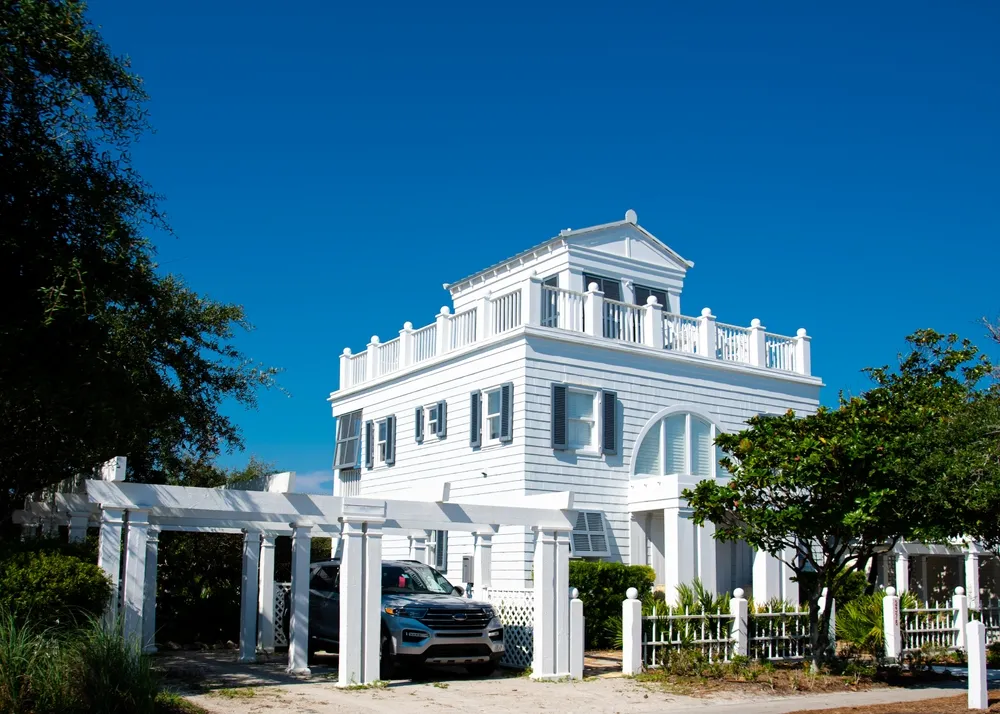


A new demographic of high-net-worth buyers, younger, entrepreneurial, and less tied to traditional wealth enclaves, is reshaping property development and investment expectations along Florida’s 30-A corridor.
For generations, Florida’s most recognized luxury coastal markets have been defined by established, multigenerational money concentrated in places like Palm Beach and Miami Beach. That profile is changing. According to Bob Dickhaus, Founder and Managing Partner of Dune Vacation Rentals, a distinctly different buyer is now driving investment in Northwest Florida’s 30-A market: younger entrepreneurs, professional athletes, and family offices that operate with different priorities, timelines, and expectations about what a luxury coastal property should deliver.
“The type of person that’s investing in and building those properties is different than the Palm Beach type person,” Dickhaus says. “Younger, more entrepreneurial types are investing in our area.”
The shift carries real consequences for how these markets develop, what amenities and services gain traction, and how quickly property values move.
COVID Accelerated Geographic Discovery
The influx of new wealth into 30-A did not happen in a vacuum. Dickhaus points to the COVID period as a catalyst that dramatically expanded the market’s geographic reach. Before 2020, 30-A functioned primarily as a regional drive market, a destination for affluent families from Atlanta, Nashville, Birmingham, and New Orleans who could reach the Panhandle by car.
Florida’s relatively early reopening during the pandemic drew visitors from California, the Midwest, and the Mountain West who had never considered the area before. Many came looking for fewer restrictions. Some stayed permanently. Others discovered the market and began investing.
“When they discovered this area, they were like, wow, this is really incredible,” Dickhaus says. The result is a market that now draws buyers who fly to the destination rather than simply driving, creating a more geographically diverse ownership base.
That diversification is significant. A market that draws buyers nationally, rather than regionally, is less exposed to the economic cycles of any single metro area and more likely to sustain demand across different market conditions.
A Different Wealth Profile
The buyers entering 30-A are not simply younger versions of the Palm Beach investor. They bring a different relationship to wealth, a different tolerance for experimentation, and in many cases a different investment thesis. While traditional luxury real estate buyers in established enclaves may prioritize prestige, privacy, and capital preservation, the entrepreneurs and athletes arriving in 30-A appear more interested in combining experiential value with financial return.
Family offices are also active in the market, drawn by the dual appeal of personal use and investment income: properties that generate four to ten percent annual cash yields while also appreciating. “We get a lot of athletes, we get a lot of Nashville people, so it’s a different kind of demographic in terms of the wealthy investor,” Dickhaus says.
This investment logic supports a different kind of property development. The homes being built in 30-A now, some valued at $25 million to $40 million, are comparable in price to properties in Palm Beach or Aspen. Still, they are being built for a buyer who wants to use the property, rent it, and see it perform as an asset simultaneously. That combination of use and return is less common among older-money buyers who dominate traditional luxury enclaves, where properties are often held as status assets rather than income-generating investments.
A New Luxury Tier Emerges
The 30-A market’s evolution is visible in how its highest tier has taken shape. Dickhaus frames the area’s trajectory as “the Palm Beach of the North,” a description that captures the area’s arrival as a legitimate luxury destination while marking its separation from the older, more established wealth culture of South Florida.
It is this top tier of the market, rather than 30-A broadly, that is being shaped most directly by the entrepreneurial, experience-driven buyer profile described earlier. As that demographic continues to define the top end of the market, expectations around service, amenities, and property performance are shifting to match international luxury standards rather than the norms of a traditional drive-market destination.
Looking ahead, the question for 30-A is whether the area can sustain demand at the $25 million-plus level as more inventory comes online, and whether the infrastructure, dining, and cultural offerings will develop quickly enough to match buyer expectations shaped by more established luxury destinations. As more emerging coastal markets compete for high-net-worth buyers who are no longer anchored to traditional enclaves, the operators and developers who understand this demographic earliest may be best positioned to capture the investment activity that follows.
About the Expert: Bob Dickhaus is Founder of Dune Vacation Rentals, a luxury property management company he established in 2013 along Florida’s 30A corridor, managing properties valued from $4.5 million up to $40 million.
This article is intended for informational purposes only and does not constitute legal, financial, or investment advice. The views and opinions expressed herein reflect those of the individuals quoted and do not represent an endorsement of any company, product, or service mentioned. Readers should conduct their own due diligence and consult qualified professionals before making any investment decisions.