
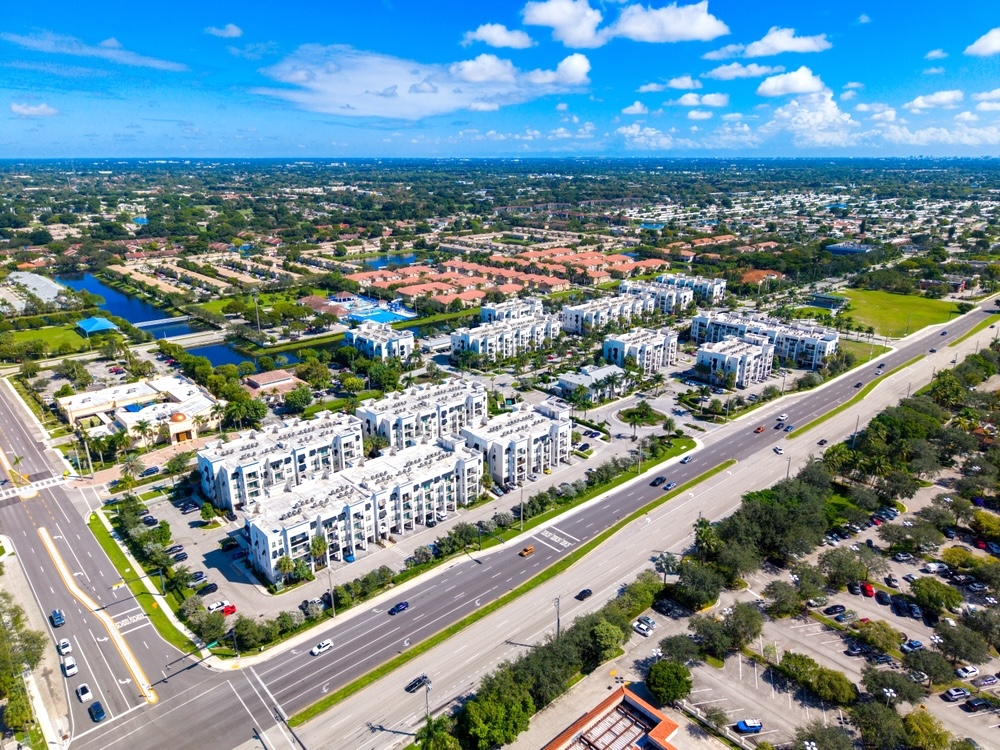


Aging 55-plus condo communities in Tamarac and Sunrise are underperforming the broader Broward County market by a significant margin, weighed down by rising special assessments and a buyer pool that lacks the financial capacity to absorb them.
The pressure traces back to Florida’s post-Surfside legislative overhaul, which accelerated reserve funding requirements and structural inspection mandates across the state’s aging condo stock. Communities that spent decades deferring maintenance are now facing a reckoning — and the bills are arriving all at once.
One Segment Is Struggling
South Florida’s real estate market is frequently described as resilient, and for much of the inventory across Broward County, that characterization holds. But Denice Landaeta, Founder and Luxury Real Estate Agent at Dluxuss Group with Coldwell Banker, draws a sharp distinction between the market’s overall performance and the specific conditions facing 55-plus condo communities in areas like Tamarac and Sunrise.
These communities are contending with escalating special assessments tied to aging buildings that require expensive repairs. Many residents are on fixed incomes and cannot absorb those costs. “The 55-plus communities – those are the ones that are suffering,” Landaeta says.
In her view, this is not a cyclical dip but a structural problem compounding over time. Aging buildings require expensive repairs and upgrades, and the special assessments levied to fund those costs are falling on residents who are not in a position to pay. The result is a segment where sellers are motivated but buyers are scarce, and where the financial burden of ownership is actively deterring transactions.
Assessments Are Trapping Sellers
Florida’s condo assessment crisis has been well-documented at the state level following the 2021 Surfside collapse and subsequent legislative changes requiring more rigorous reserve funding and structural inspections. Landaeta’s observations suggest the impact is landing unevenly across the market, with 55-plus communities bearing a disproportionate share of the pain.
These communities tend to have older building stock, deferred maintenance histories, and homeowner associations that have historically underfunded reserves. When assessment demands arrive – whether for structural repairs, elevator replacements, or mandated reserve contributions – the bills can run into tens of thousands of dollars per unit. For residents on fixed retirement incomes, these costs are not manageable. For prospective buyers evaluating a purchase, a pending or recently levied special assessment is a significant deterrent.
Landaeta notes that her team is currently carrying three or four 55-plus units on the market simultaneously, and that these properties are among the most difficult to move. Buyer interest in this category is notably thin compared to other segments.
The contrast with Broward’s stronger markets is stark. Landaeta identifies Parkland, Weston, Miramar, and Pembroke Pines as consistently strong performers – markets dominated by single-family homes with younger buyer demographics and none of the assessment exposure that burdens aging condo communities.
Demographics Compound the Crisis
Beyond building age and assessment timing, these communities face a demographic mismatch between the existing resident base and the pool of buyers willing to enter age-restricted housing.
Younger buyers – even those in their late 50s – often prefer the flexibility of non-age-restricted communities or the equity-building potential of single-family homes. The buyers most likely to purchase in a 55-plus community are often those with the least financial flexibility, making them more sensitive to assessment risk and less able to compete in a market where sellers need to price aggressively to attract any interest at all.
Landaeta’s observation that some current residents cannot afford to pay their assessments points to a deeper problem: owners who want or need to sell may be unable to do so at a price that covers their outstanding obligations, leaving them effectively trapped in properties they can no longer afford to maintain.
This combination – motivated sellers, thin buyer demand, and rising carrying costs – tends to produce extended holding periods and downward price pressure. Whether it represents a temporary correction tied to the current assessment cycle or a longer-term structural decline remains unclear, but Landaeta’s ground-level experience suggests the pressure is not abating quickly.
Selling Requires Specialized Positioning
Selling in this segment requires a different approach than listing in Broward’s stronger markets. Landaeta says her team works with 55-plus sellers by setting realistic pricing that accounts for assessment exposure, targeting the narrower buyer pool that remains interested in age-restricted communities, and consulting directly with sellers about what they can expect in today’s environment.
“We also try to help those clients,” Landaeta says, acknowledging that these transactions demand more intensive engagement than the team’s higher-performing listings.
The broader question raised by these conditions is whether the 55-plus condo segment in markets like Tamarac and Sunrise will find a floor as the current assessment cycle works through the system, or whether the combination of aging infrastructure, legislative compliance costs, and demographic headwinds will continue to suppress values. For investors and agents active in Broward County, the divergence between this segment and the single-family market represents both a risk to monitor and, for those with the expertise to navigate distressed sales, a segment worth watching as assessment obligations continue to come due.
About the Expert: Denice Landaeta is the Founder and Luxury Real Estate Agent at Dluxuss Group with Coldwell Banker, serving Miami-Dade, Broward, and Palm Beach counties in South Florida.
This article is intended for informational purposes only and does not constitute legal, financial, or investment advice. The views and opinions expressed herein reflect those of the individuals quoted and do not represent an endorsement of any company, product, or service mentioned. Readers should conduct their own due diligence and consult qualified professionals before making any investment decisions.